

7 Common and Serious Side Effects of Airsupra
Understanding Airsupra Side EffectsAirsupra is a prescription inhaler used as a rescue medication to relieve asthma symptoms in adults aged 18 years and older. It is not [...]
Read More
Medically reviewed by Oghenefejiro Okifo | MD, Harvard Medical School | Henry Ford Hospital - Detroit, MI on April 1st, 2024.
These growths develop in up to 50% of people over age 50, with women being 4 times more likely to develop them than men, especially after age 40.
Most nodules are discovered incidentally during imaging—only 5-15% are malignant, but those larger than 4cm have higher cancer risk and cause compression symptoms.
Previous radiation exposure to the head or neck (including childhood medical treatments) increases cancer risk 20-30 years later, requiring closer monitoring.
Fine needle aspiration biopsy is performed on nodules over 1cm or those with suspicious ultrasound features to determine if cells are benign, malignant, or indeterminate.
Suppressive thyroid hormone therapy aims to shrink benign nodules by keeping TSH levels below 0.5 mU/L, though success varies and requires careful monitoring for hyperthyroidism.
Thyroid nodules are lumps or bumps that form on the thyroid gland, a small but powerful organ located in your neck. While most thyroid nodules are benign (noncancerous), it's essential to understand their symptoms, causes, and treatment options to ensure proper management of your thyroid health.
Thyroid nodules are solid or fluid-filled growths that develop within the thyroid gland. The thyroid gland is responsible for producing thyroid hormone, which regulates various functions in the body, including metabolism, heart rate, and energy levels. When cells in the thyroid grow abnormally, they can form nodules.
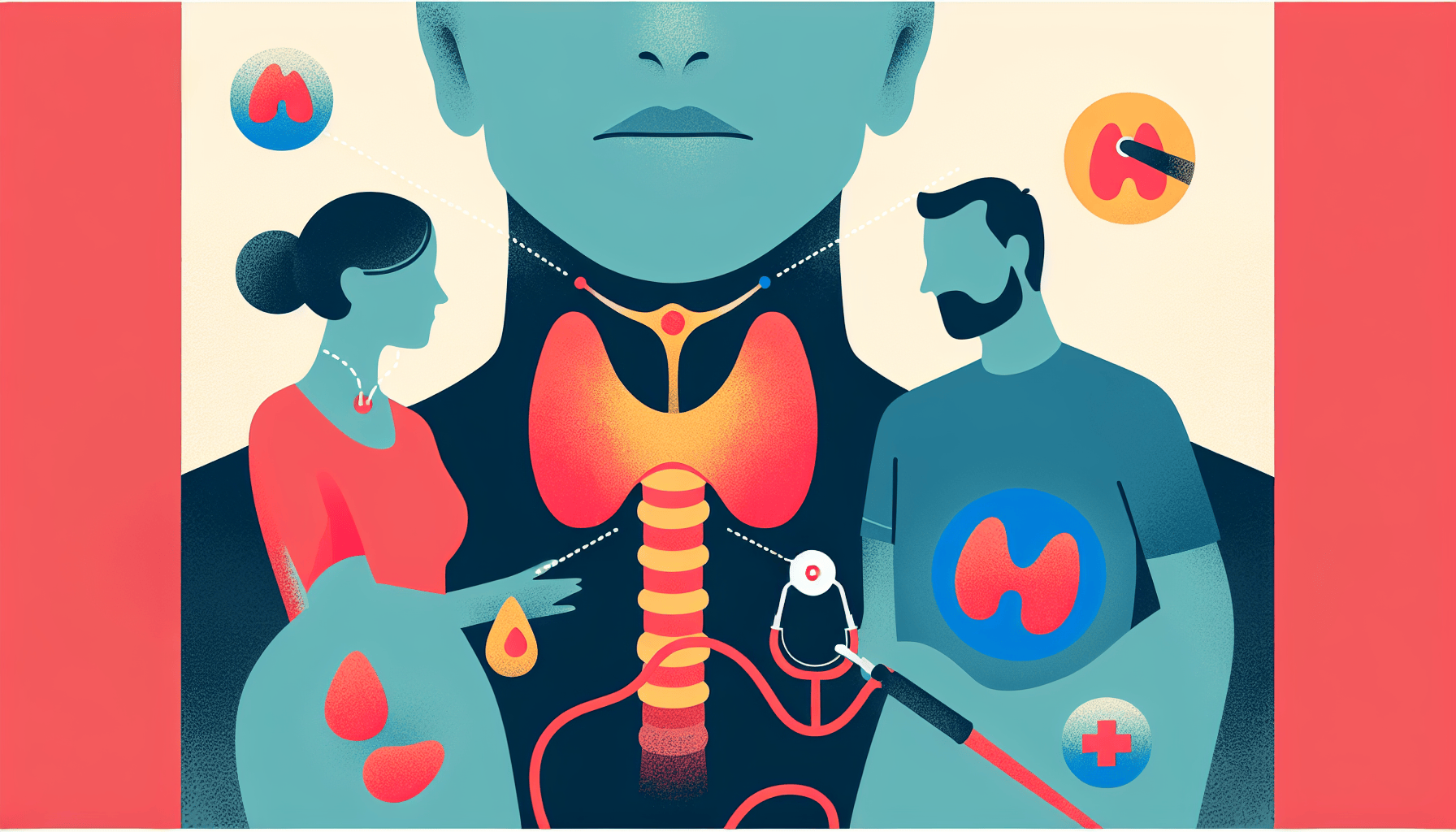
In most cases, thyroid nodules do not cause noticeable symptoms. However, if a nodule grows large enough, it may lead to:
Difficulty breathing or swallowing
A feeling of fullness or tightness in the throat
Hoarseness or changes in voice
Neck pain or discomfort
When a thyroid nodule produces excess thyroid hormone (a "hot" nodule), it can cause symptoms of hyperthyroidism, such as weight loss, muscle weakness, heat intolerance, anxiety, irritability, and irregular heartbeat.
Conversely, some thyroid nodules may lead to underproduction of thyroid hormone, resulting in hypothyroidism symptoms like fatigue, cold sensitivity, constipation, dry skin, weight gain, and depression.
Several factors can contribute to the development of thyroid nodules, including:
Chronic inflammation of the thyroid (thyroiditis)
Iodine deficiency (rare in the United States due to iodine-fortified foods)
Thyroid adenomas (overgrowth of thyroid tissue)
Thyroid cancer (in rare cases)
Certain factors may increase your risk of developing thyroid nodules, such as:
Being female
Advancing age
Family history of thyroid nodules
Exposure to radiation in the head or neck area
If you suspect you have a thyroid nodule, consult your healthcare provider or an endocrinologist (a specialist in hormone-related disorders). They will perform a physical examination and may recommend tests such as:
Blood tests to evaluate thyroid hormone levels
Thyroid ultrasound to visualize the nodule
Fine-needle biopsy to collect cells for analysis
Thyroid scan to assess nodule activity
These tests help determine whether a nodule is benign or cancerous and guide appropriate treatment decisions.
Treatment for thyroid nodules depends on the type, size, and associated symptoms. Noncancerous nodules may be managed through:
Watchful waiting with regular monitoring
Thyroid hormone therapy to suppress nodule growth
Radioactive iodine, antithyroid medications, or beta blockers for nodules causing hyperthyroidism
Cancerous thyroid nodules, large nodules causing compressive symptoms, or nodules with concerning features typically require surgical removal.
If you have been diagnosed with a thyroid nodule, work closely with your healthcare team to develop a personalized management plan that addresses your specific needs and concerns.
For more information on thyroid nodules and thyroid health, consult the following reputable sources:
While most thyroid nodules are benign, proper evaluation through ultrasound and possible biopsy is essential to rule out the 5-15% that are cancerous. Regular monitoring every 6-18 months allows early detection of changes in size or characteristics. If you're experiencing neck swelling, difficulty swallowing, or voice changes, Doctronic can help you get prompt evaluation and peace of mind.
Understanding Airsupra Side EffectsAirsupra is a prescription inhaler used as a rescue medication to relieve asthma symptoms in adults aged 18 years and older. It is not [...]
Read MoreUnderstanding Budesonide Interactions for Safe UsageBudesonide is a corticosteroid medication used to treat conditions like asthma, Crohn's disease, and ulcerative [...]
Read MoreUnderstanding Xolair Interactions for Safe UsageXolair (omalizumab) treats severe allergic asthma, chronic hives, and nasal polyps. When starting this medication, patients [...]
Read More