

7 Common and Serious Side Effects of Airsupra
Understanding Airsupra Side EffectsAirsupra is a prescription inhaler used as a rescue medication to relieve asthma symptoms in adults aged 18 years and older. It is not [...]
Read MoreApproximately 40% to 50% of women experience some degree of hair thinning or loss after menopause, making it one of the most common menopausal symptoms
Declining estrogen and progesterone, combined with relatively higher androgen levels, directly impact hair follicle health
Medical treatments include hormone replacement therapy, topical minoxidil, and low-level laser therapy
Nutritional support focusing on iron, biotin, zinc, and protein can strengthen existing hair
Stress management and gentle hair care practices play significant roles in slowing hair loss progression
doctronic.tech offers convenient telehealth consultations to discuss personalized treatment options
Noticing more hair in the brush or a wider part line can feel alarming. For women going through menopause, thinning hair ranks among the most distressing physical changes, yet it remains surprisingly common. About half of postmenopausal women experience noticeable hair thinning or loss. This isn't a rare occurrence or something to dismiss as vanity: it's a legitimate medical concern affecting millions.
The causes of menopausal hair loss involve hormonal shifts, nutritional factors, and lifestyle elements. Understanding these causes opens the door to effective treatment options that can slow, stop, or even partially reverse the process. Women don't need to accept thinning hair as inevitable. With the right approach, maintaining fuller, healthier hair throughout menopause and beyond is achievable.
Estrogen does more than regulate reproductive functions: it actively supports hair growth by extending the growth phase of the hair cycle. During reproductive years, estrogen keeps hair in its active growth stage longer, resulting in thicker, fuller strands. Progesterone works alongside estrogen to maintain this balance.
When menopause arrives, both hormones decline significantly. This drop shortens the growth phase and accelerates the resting phase, meaning hair falls out faster than it regrows. The result is gradual overall thinning rather than the patchy bald spots men typically experience.
Here's what most women don't realize: menopause doesn't increase androgen production. The problem is relative. As estrogen and progesterone fall, androgens like testosterone become proportionally more dominant. This shift triggers hair follicle miniaturization, particularly at the crown and temples.
Androgens convert to dihydrotestosterone (DHT), which binds to receptors in hair follicles and gradually shrinks them. Each hair cycle produces thinner, shorter strands until some follicles stop producing visible hair entirely. This process explains why menopausal hair loss typically appears as diffuse thinning across the scalp.
Female pattern hair loss presents differently from male pattern baldness. Women notice widening at the part line first, followed by general thinning across the top of the scalp. The hairline usually remains intact, distinguishing FPHL from other conditions.
A dermatologist can confirm FPHL through scalp examination and sometimes a biopsy. Early identification matters because treatment works best when started before significant follicle miniaturization occurs. Women accounted for about 58% of the global hair treatment market, reflecting the seriousness with which women are addressing this concern.
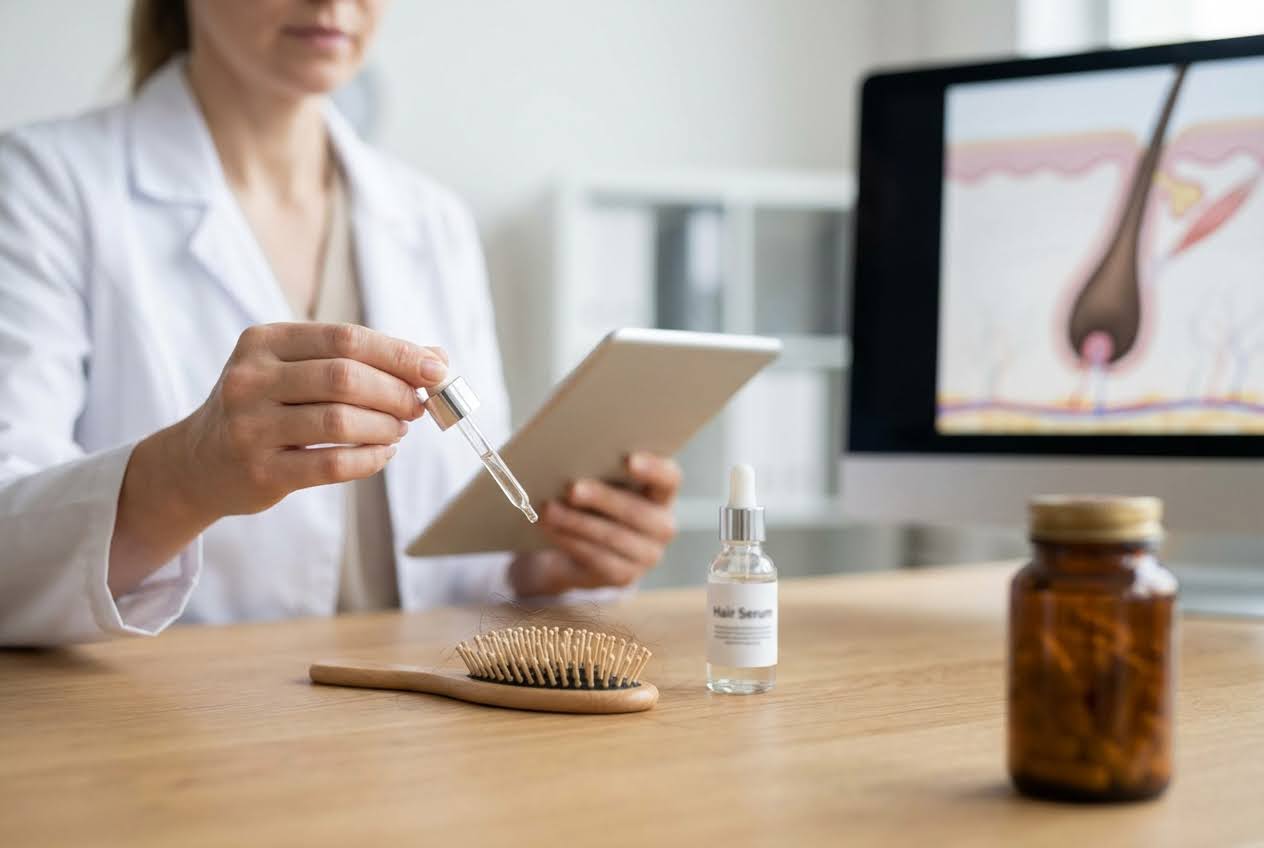 Secondary Factors Contributing to Thinning
Menopause itself creates stress, and chronic stress produces excess cortisol. High cortisol levels push hair follicles into the resting phase prematurely, causing a condition called telogen effluvium. This type of hair loss appears suddenly, often three months after a stressful event.
The good news: telogen effluvium is usually temporary. Once stress levels normalize, hair typically regrows within six to nine months. Managing stress during menopause isn't just good for mental health: it directly protects hair.
Iron deficiency affects hair growth significantly, and women in menopause may have depleted iron stores from years of menstruation. Low ferritin levels, even within "normal" range, correlate with increased hair shedding. Protein deficiency, vitamin D insufficiency, and zinc deficiency also contribute to hair thinning.
Blood tests can identify these deficiencies quickly. Correcting them through diet or supplementation often produces noticeable improvement within three to six months.
Thyroid disorders become more common during menopause, and both hypothyroidism and hyperthyroidism cause hair loss. The symptoms overlap with typical menopausal complaints: fatigue, weight changes, and mood shifts. This overlap means thyroid problems often go undiagnosed for months or years.
A simple blood test measuring TSH, T3, and T4 levels can rule out thyroid dysfunction. If present, treating the underlying thyroid condition typically resolves associated hair loss.
HRT addresses menopausal hair loss at its hormonal root. By restoring estrogen levels, HRT can slow or stop hormone-related thinning. Women considering HRT should discuss risks and benefits with their healthcare provider, as individual factors influence whether it's appropriate.
doctronic.tech provides convenient telehealth consultations where women can discuss HRT options with licensed physicians available 24/7 across all 50 states.
Minoxidil remains the gold standard topical treatment for female pattern hair loss. The 2% solution is FDA-approved for women, though some dermatologists prescribe the 5% version off-label for better results. Minoxidil works by extending the growth phase and increasing blood flow to follicles.
Many patients come to us with concerns about hair loss, and we take them seriously. We know hair thinning can affect your confidence, so we're committed to providing the most effective, personalized solutions.
LLLT devices stimulate hair follicles with red light. FDA-cleared devices are available as combs, caps, or helmets for home use. Clinical evidence supports modest-to-moderate improvement in hair density with consistent use for at least 16 to 24 weeks. LLLT works best combined with other treatments rather than as a standalone solution.
Prioritize these nutrients for optimal hair health:
Iron: aim for ferritin levels above 50 ng/mL
Biotin: 30 to 100 mcg daily is sufficient for most adults; higher doses are rarely necessary
Zinc: 8 to 11 mg daily maintains follicle health
Protein: 0.8 to 1 gram per kilogram of body weight
Omega-3 fatty acids: reduce scalp inflammation
Harsh styling damages already vulnerable hair. Avoid tight ponytails, excessive heat styling, and chemical treatments during active thinning. Use sulfate-free shampoos and conditioners regularly to prevent breakage.
Scalp massage increases blood circulation to follicles. Spending five minutes daily massaging the scalp can support hair health alongside other treatments.
Regular exercise, adequate sleep, and mindfulness practices lower cortisol levels. Yoga and meditation specifically help regulate the stress response. Even short daily walks make a measurable difference in stress hormone levels.
Hair regrowth takes time: expect six to twelve months before seeing significant improvement from any treatment. Consistency matters more than intensity. Combining multiple approaches typically produces better results than relying on a single treatment.
Regular check-ins with a healthcare provider help track progress and adjust treatments as needed. doctronic.tech makes these consultations accessible and affordable, with video visits under $40 available around the clock.
Partial reversal is possible with early intervention, but complete restoration to pre-menopausal density is unlikely. Treatment focuses on stopping progression and regrowing what's possible.
Most treatments require three to six months of consistent use before visible improvement appears. Full results typically emerge at the twelve-month mark.
Without treatment, the thinning tends to progress slowly. With appropriate intervention, many women maintain and even improve their hair density.
Start with your primary care provider or a telehealth consultation to rule out underlying conditions. A dermatologist specializing in hair loss can provide advanced treatments if needed.
Supplements help if deficiencies exist, but won't address hormonal causes. Most women benefit from combining nutritional support with targeted medical treatments.
Menopausal hair thinning is common but treatable. Hormonal shifts, nutrient deficiencies, and stress all contribute, and the best results come from a personalized plan that may include medical therapy, nutrition support, and lifestyle changes. doctronic.tech offers convenient telehealth consultations to help you identify the cause and choose the right treatment path.
Understanding Airsupra Side EffectsAirsupra is a prescription inhaler used as a rescue medication to relieve asthma symptoms in adults aged 18 years and older. It is not [...]
Read MoreUnderstanding Budesonide Interactions for Safe UsageBudesonide is a corticosteroid medication used to treat conditions like asthma, Crohn's disease, and ulcerative [...]
Read MoreUnderstanding Xolair Interactions for Safe UsageXolair (omalizumab) treats severe allergic asthma, chronic hives, and nasal polyps. When starting this medication, patients [...]
Read More