

7 Common and Serious Side Effects of Airsupra
Meta Description: Learn about the 7 common and serious side effects of Airsupra and how to manage risks like oral thrush or heart issues through proper inhaler [...]
Read MoreEstrogen receptors exist throughout the eye, including in the meibomian glands that produce the oily layer of tears, explaining why hormonal changes during menopause directly affect eye comfort
Research shows that up to 38% of postmenopausal women experience dry eye, compared to about 20% of premenopausal women
Watery eyes can actually signal dryness, as the eyes overproduce low-quality tears to compensate for poor tear film
Treatment options range from lifestyle changes like omega-3 supplements to medical interventions, including prescription drops and advanced procedures
doctronic.tech offers convenient 24/7 telehealth consultations to discuss dry eye symptoms and treatment options
The connection between estrogen and eye health catches many women off guard. Around age 50, as hormone levels shift dramatically, a surprising symptom often emerges: eyes that burn, itch, and feel like sandpaper. This isn't a coincidence. The estrogen-eye connection explains why managing dry eyes during menopause requires understanding what's happening beneath the surface. Dry eye disease affects millions of women during and after menopause, yet it remains under-discussed in typical healthcare conversations. Clinicians should add dry eye disease to their routine questionnaires for menopausal patients. Getting proper care starts with recognizing the biological mechanisms at play and knowing which treatments actually work.
Hormones regulate far more than reproductive functions. They influence nearly every tissue in the body, including the delicate structures of the eye.
The meibomian glands sit along the eyelids and produce the oily layer that prevents tears from evaporating too quickly. Because these glands contain estrogen and androgen receptors, they are highly sensitive to hormonal changes. As estrogen declines during menopause, the glands can become inflamed or blocked, leading to dysfunction. Meibomian gland dysfunction is considered the leading cause of dry eye disease and plays a central role in menopausal eye discomfort.
Healthy tears consist of three layers: mucin, aqueous, and lipid. Each layer serves a specific purpose. The lipid layer prevents evaporation, the aqueous layer provides moisture and nutrients, and the mucin layer helps tears stick to the eye surface. Hormonal changes during menopause can alter the composition and stability of these layers, primarily by affecting glandular secretions and inflammation. The result is tears that evaporate too quickly, leaving the cornea exposed and irritated.
Estrogen doesn't act alone. Androgens, often called male hormones, but present in all bodies, also decline during menopause and affect meibomian gland function. Progesterone influences inflammation levels throughout the body, including in ocular tissues. The combined loss of these hormones creates a perfect storm for the development of dry eye. Women using doctronic.tech can discuss their complete hormonal picture with healthcare providers to develop targeted treatment plans.
Dry eye symptoms vary widely between individuals. Some women experience mild irritation while others develop severe discomfort that interferes with daily activities.
The most frequent complaints include a gritty or sandy feeling, as if something is stuck in the eye. Burning and stinging sensations often worsen throughout the day. Many women notice their vision becomes temporarily blurry, especially during reading or screen use. These symptoms typically intensify in dry environments, windy conditions, or air-conditioned spaces.
Excessive tearing seems counterintuitive as a dry eye symptom, but it's actually common. When the eye surface becomes irritated from poor-quality tears, the lacrimal glands respond by producing large amounts of watery, reflex tears. These emergency tears lack the necessary lipids and mucins for lasting comfort. They flood the eye without providing real relief, then evaporate quickly, triggering another round of reflex tearing.
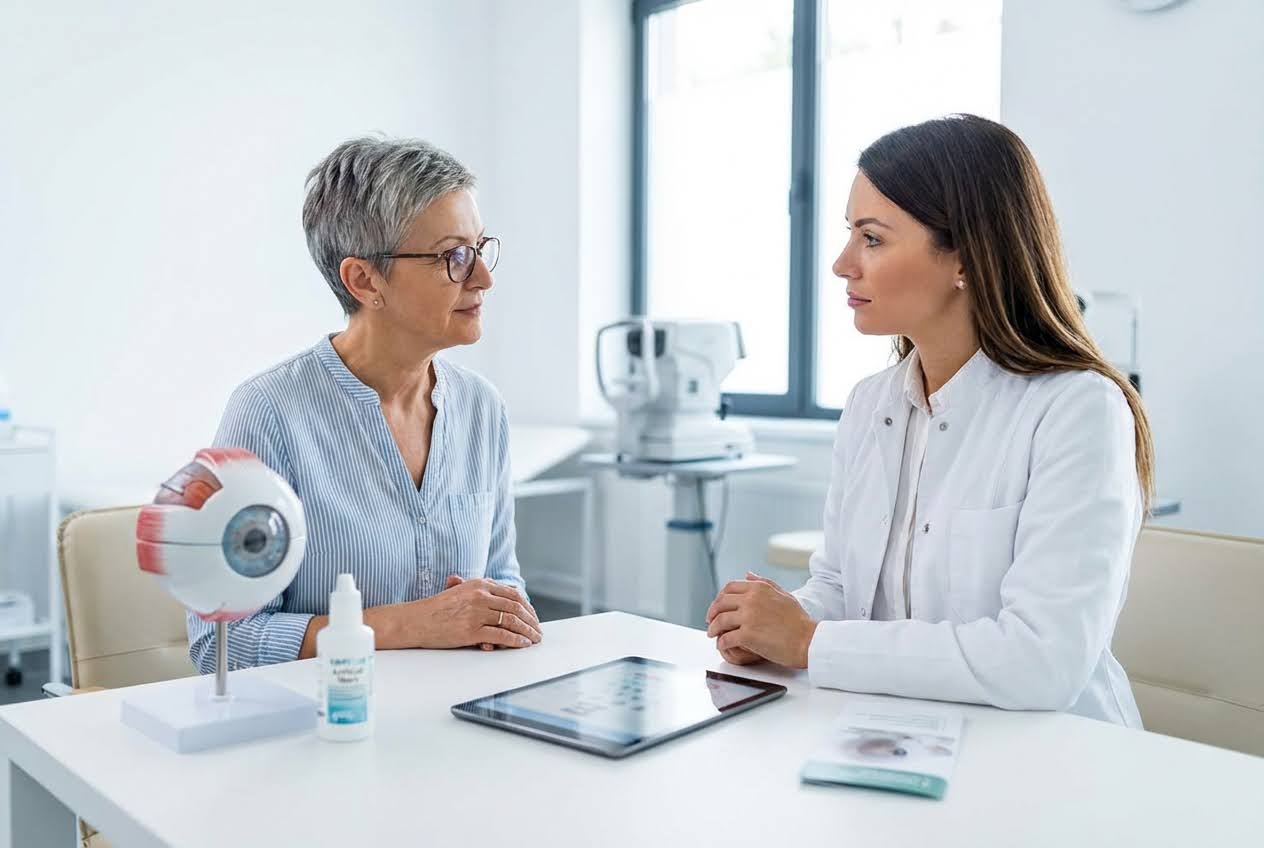 Medical Treatments and Hormone Replacement Therapy (HRT)
Several medical interventions can address menopausal dry eye, ranging from systemic hormone therapy to targeted ocular treatments.
Hormone replacement therapy presents a complicated picture for dry eye. Some studies suggest estrogen-only HRT may actually worsen dry eye symptoms, while combined estrogen-progesterone therapy shows mixed results. Each woman responds differently based on her unique hormonal profile. Early detection enables timely intervention in addressing hormonal effects on eye health.
Cyclosporine drops, sold under brand names like Restasis, reduce inflammation and help the eyes produce more natural tears. Lifitegrast, marketed as Xiidra, blocks inflammatory proteins on the eye surface. Both require consistent use for weeks before showing full benefits. Short-term steroid drops can provide quick relief during flare-ups but aren't suitable for long-term use.
LipiFlow treatment applies controlled heat and pressure to the eyelids, clearing blocked meibomian glands and restoring oil flow. Punctal plugs are tiny devices inserted into the tear ducts to prevent tears from draining away too quickly. Both procedures offer longer-lasting relief than drops alone for moderate to severe cases.
Medical treatments work best when combined with consistent lifestyle modifications that support overall eye health.
Omega-3 fatty acids from fish oil or flaxseed reduce inflammation throughout the body, including in ocular tissues. Current clinical guidance recommends around 1,000 mg daily of combined EPA and DHA, though individual needs may vary. Drinking adequate water, typically eight glasses daily, ensures the body can produce sufficient tear volume. Limiting caffeine and alcohol helps, as both act as diuretics that can worsen dehydration.
Indoor humidity below 30% accelerates tear evaporation. A bedroom humidifier set between 40-60% humidity can provide overnight relief. Screen use reduces blink rate by up to 60%, starving the eyes of their natural moisture cycle. The 20-20-20 rule helps: every 20 minutes, look at something 20 feet away for 20 seconds.
Warm compresses applied for 10 minutes daily soften hardened oils in the meibomian glands, allowing them to flow more freely. Gentle lid scrubs with diluted baby shampoo or commercial lid cleansers remove debris and bacteria that contribute to gland dysfunction. This simple routine, performed consistently, often provides relief equal to over-the-counter drops.
Dry eye management requires ongoing attention rather than a one-time fix. Symptoms may fluctuate with seasons, stress levels, and other health changes. Building a relationship with an eye care provider who understands hormonal influences on ocular health makes long-term management easier. Regular check-ups allow for adjustments in treatment as needs change. Women seeking guidance can start by consulting with healthcare providers through doctronic.tech, which offers 24/7 telehealth visits with licensed doctors in all 50 states for under $40. Over 10 million people have used the service, which combines AI-powered health insights with real physician consultations.
Yes, perimenopause can trigger dry eye symptoms years before periods stop completely. Hormone fluctuations during this transition phase affect tear production even when estrogen levels haven't fully declined.
Symptoms often stabilize but rarely disappear completely without treatment. The hormonal changes that cause dry eye are permanent, so ongoing management remains necessary for most women.
Artificial tears provide temporary relief but don't address the underlying inflammation or gland dysfunction. They work best as part of a comprehensive treatment plan rather than as a standalone solution.
Timing matters: if symptoms began around perimenopause or menopause and worsen with hormonal fluctuations, the connection is likely. An eye doctor can perform tests to rule out other causes, like autoimmune conditions.
Yes, but adjustments may be needed. Switching to daily disposable lenses, using preservative-free rewetting drops, and reducing wear time can help. Some women find switching to glasses part-time provides relief.
Dry eyes during menopause are often driven by hormonal changes that affect tear production and quality. Effective relief usually requires a combination of targeted treatments and daily habits that support eye health. Early evaluation can prevent symptoms from worsening. For personalized guidance, doctronic.tech offers convenient 24/7 telehealth consultations to help you explore the right treatment options.
Meta Description: Learn about the 7 common and serious side effects of Airsupra and how to manage risks like oral thrush or heart issues through proper inhaler [...]
Read MoreMeta Description: Learn about 8 budesonide interactions and what to avoid when you’re taking budesonide, including grapefruit and common drugs, to ensure your treatment is [...]
Read MoreMeta Description: Learn about these 7 Xolair interactions and what to avoid when you’re taking Xolair to safely manage your asthma, chronic hives, or nasal polyp [...]
Read More