

7 Common and Serious Side Effects of Airsupra
Meta Description: Learn about the 7 common and serious side effects of Airsupra and how to manage risks like oral thrush or heart issues through proper inhaler [...]
Read MoreRadiculopathy describes nerve root compression anywhere along the spine, while sciatica refers specifically to pain traveling down the sciatic nerve pathway.
Sciatica affects an estimated 5% to 10% of people during their lifetime, making it one of the most common pain complaints.
Both conditions share overlapping causes like herniated discs and spinal stenosis, but require different diagnostic approaches.
Treatment ranges from conservative physical therapy to surgical intervention, depending on severity and underlying cause.
Accurate diagnosis through physical exams, imaging, and nerve conduction studies determines the most effective treatment path.
Nerve pain sends millions of people searching for answers each year. The confusion between radiculopathy and sciatica causes many patients to misunderstand their condition, leading to delayed treatment and unnecessary suffering. These terms get used interchangeably in casual conversation, but they describe distinct medical concepts that require different approaches.
The global sciatica treatment market is projected to reach, reflecting the widespread prevalence of these conditions. Understanding the key differences between radiculopathy and sciatica helps patients communicate better with their doctors and pursue appropriate care. doctronic.tech provides AI-powered medical guidance to help people understand these distinctions before consulting healthcare providers.
Radiculopathy occurs when a nerve root becomes compressed or irritated where it exits the spinal column. This compression can happen at any level of the spine: cervical, thoracic, or lumbar. The resulting symptoms depend entirely on which nerve root is affected and how severely it's compressed.
Think of radiculopathy as an umbrella term covering nerve root problems throughout the entire spine. A pinched nerve in the neck, causing arm pain, qualifies as radiculopathy, just as compression in the lower back causing leg symptoms does.
Sciatica refers to a pattern of pain that radiates along the sciatic nerve's pathway. This nerve runs from the lower back through the buttocks and down each leg. Sciatica affects an estimated 5% to 10% of people at some point in their lives, making it extremely common.
Lumbar radiculopathy is nerve compression in the lower spine, while sciatica is pain from irritation of the sciatic nerve. Sciatica is actually a symptom of lumbar radiculopathy, not a separate condition entirely.
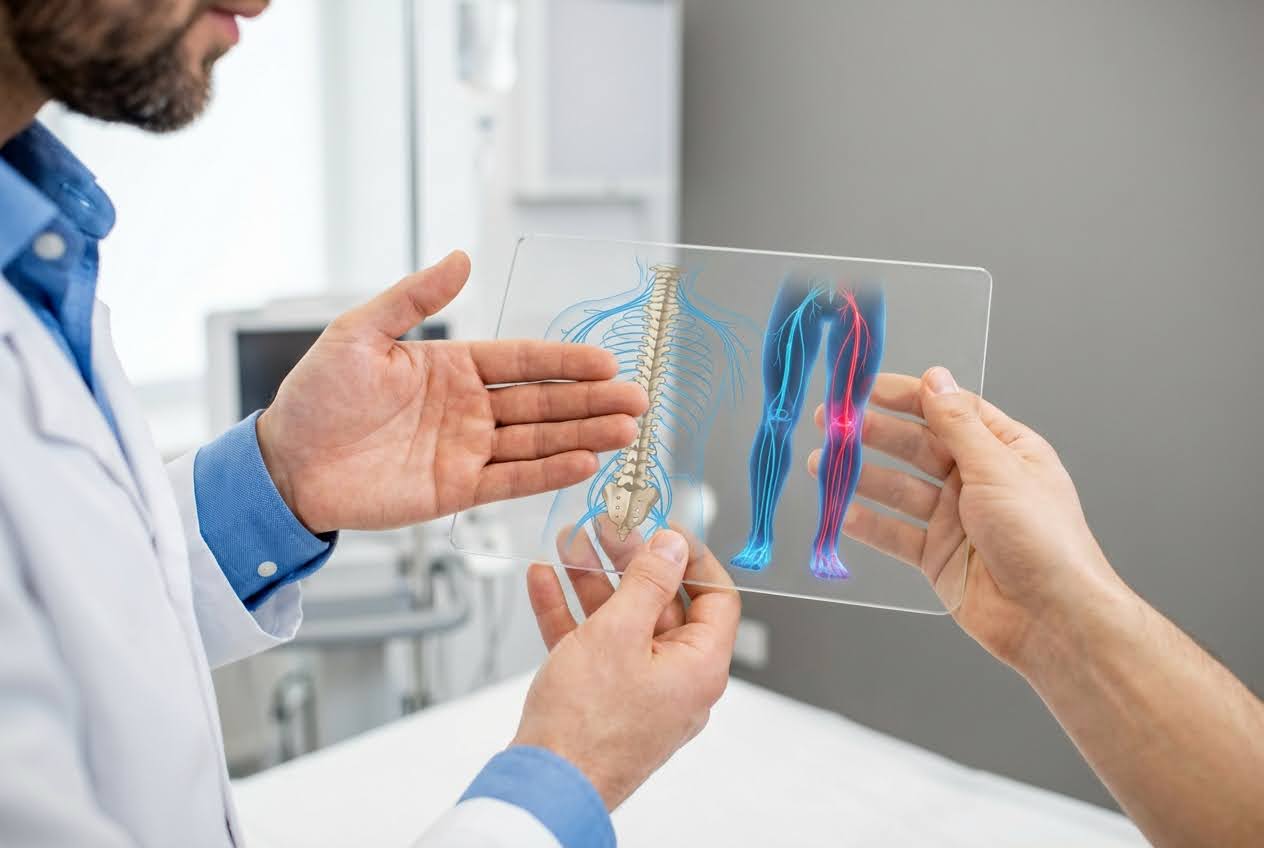 Anatomical Origins and Locations of Nerve Pain
Cervical radiculopathy affects the neck region and typically causes pain, numbness, or weakness in the shoulders, arms, and hands. Thoracic radiculopathy, the rarest form, impacts the mid-back and can cause chest or abdominal symptoms. Lumbar radiculopathy occurs in the lower back and creates symptoms in the buttocks, legs, and feet.
Each spinal region has specific nerve roots that control different body areas. When compression occurs, the symptoms follow predictable patterns based on which nerve root is involved.
The sciatic nerve forms from nerve roots L4 through S3 (sometimes including L3 fibers) in the lower spine. It travels through the pelvis, past the piriformis muscle, and down the back of each thigh before branching into smaller nerves at the knee. This lengthy pathway explains why sciatic pain can be felt anywhere from the lower back to the toes.
Herniated discs remain the most frequent cause of both radiculopathy and sciatica. When the soft inner material of a spinal disc pushes through its outer layer, it can press directly on nerve roots. Spinal stenosis, a narrowing of the spinal canal, creates similar compression through a different mechanism.
Age-related changes in spinal discs reduce their height and cushioning ability. This degeneration allows vertebrae to move closer together, potentially pinching nerve roots. People over 50 face higher risks for degenerative changes that lead to radiculopathy.
The piriformis muscle sits deep in the buttocks, and the sciatic nerve runs beneath or through it. When this muscle spasms or tightens, it can compress the sciatic nerve without any spinal involvement. This condition mimics lumbar radiculopathy but arises entirely outside the spine.
Radiculopathy often produces numbness in specific patterns called dermatomes, which map to individual nerve roots. Sciatica typically creates burning or electric sensations along the back of the leg. Some patients experience both numbness and tingling simultaneously, depending on the severity of nerve involvement.
Significant nerve compression can weaken muscles controlled by the affected nerve root. Foot drop, difficulty raising the big toe, or calf weakness may indicate serious involvement of the sciatic nerve. Reflex changes at the knee or ankle provide doctors with objective evidence of nerve dysfunction.
The straight leg raise test remains a standard screening tool for sciatica. A doctor lifts the patient's leg while the patient lies flat; pain radiating below the knee suggests involvement of the sciatic nerve. Neurological exams assess strength, sensation, and reflexes to identify which nerve roots may be affected.
MRI scans provide the clearest view of soft tissues, including discs and nerve roots. CT scans offer detailed bone images and help identify stenosis or fractures. X-rays show bone alignment and spacing, but cannot visualize soft-tissue problems directly.
EMG testing measures electrical activity in muscles to detect nerve damage. Nerve conduction studies assess how quickly electrical signals travel through nerves. These tests help distinguish radiculopathy from other conditions, such as peripheral neuropathy. doctronic.tech can help patients understand what these diagnostic tests involve before their appointments.
Most cases of radiculopathy and sciatica improve with conservative treatment within six to eight weeks. Physical therapy strengthens core muscles, improves flexibility, and reduces pressure on nerve roots. Specific exercises target the underlying cause rather than just masking symptoms.
Over-the-counter anti-inflammatory medications reduce swelling around compressed nerves. Muscle relaxants help when spasm contributes to nerve irritation. Oral steroids or epidural steroid injections deliver more powerful anti-inflammatory effects for stubborn cases.
Surgery becomes necessary when conservative treatments fail or neurological deficits worsen. Microdiscectomy removes herniated disc material pressing on nerve roots. Laminectomy creates more space in the spinal canal for compressed nerves. Minimally invasive spine surgery techniques introduced in the 2020s now offer faster recovery and lower complication rates when patients are properly selected.
Yes. Piriformis syndrome and other non-spinal causes can irritate the sciatic nerve without compressing any nerve roots in the spine.
Most acute sciatica episodes resolve within four to six weeks with conservative treatment. Chronic cases lasting longer than three months may require more aggressive intervention.
Radiculopathy is the medical term for a pinched nerve root at the spine. The terms describe the same condition using different language.
Sudden loss of bladder or bowel control, progressive leg weakness, or numbness in the groin area requires immediate medical attention. These symptoms may indicate cauda equina syndrome, a surgical emergency.
Doctronic provides AI-powered symptom assessment and medical information to help patients understand their conditions. The platform helps users prepare for doctor visits and understand their diagnosis, though it does not replace professional medical evaluation.
Radiculopathy is the broader term for nerve root compression anywhere along the spine, while sciatica describes a specific pattern of leg pain along the sciatic nerve. Although they share causes and treatments, accurate diagnosis is essential for effective care. doctronic.tech can help you better understand your symptoms and prepare for a professional evaluation.
Meta Description: Learn about the 7 common and serious side effects of Airsupra and how to manage risks like oral thrush or heart issues through proper inhaler [...]
Read MoreMeta Description: Learn about 8 budesonide interactions and what to avoid when you’re taking budesonide, including grapefruit and common drugs, to ensure your treatment is [...]
Read MoreMeta Description: Learn about these 7 Xolair interactions and what to avoid when you’re taking Xolair to safely manage your asthma, chronic hives, or nasal polyp [...]
Read More