

7 Common and Serious Side Effects of Airsupra
Understanding Airsupra Side EffectsAirsupra is a prescription inhaler used as a rescue medication to relieve asthma symptoms in adults aged 18 years and older. It is not [...]
Read MoreNearly 18% of women over 50 have osteoporosis, with rates climbing to 26% after age 65
Estrogen decline during menopause accelerates bone loss significantly in the first five to seven years
DEXA scans provide essential T-scores that determine fracture risk and treatment needs
Postmenopausal women need 1,200 mg of calcium and 800–1,000 IU of vitamin D daily
Weight-bearing exercise and resistance training directly stimulate bone-building cells
Early screening and lifestyle changes can prevent fractures before they happen
Bone loss affects millions of women after menopause, yet nearly 50% have a limited understanding of osteoporosis. This knowledge gap puts women at serious risk for hip fractures, spinal compression, and chronic pain. The good news: postmenopausal osteoporosis care works when women take action early. Through proper nutrition, targeted exercise, and medical guidance, bone loss can be slowed or even reversed. doctronic.tech provides AI-powered consultations that help women understand their bone health risks and create personalized prevention plans. This guide breaks down everything women need to know about protecting their skeletal health after menopause.
Bones constantly rebuild themselves through a process where old bone breaks down and new bone forms. Estrogen acts as the conductor of this process, keeping bone breakdown and bone building in balance. When estrogen levels drop during menopause, bone breakdown speeds up while new bone formation slows down. Women can lose up to 10–15% of their bone density in the five to seven years following menopause. This rapid loss explains why osteoporosis rates jump from 13.1% in women aged 50-64 to 26% in women over 65.
Some women face higher risks than others. A family history of osteoporosis or fractures signals genetic vulnerability. Small-framed women with lower body weight have less bone mass to lose. Smoking damages bone cells directly and reduces estrogen levels further. Heavy alcohol use interferes with calcium absorption. Women who experienced early menopause, before age 45, face longer periods of estrogen deficiency. Certain medications, like corticosteroids and some cancer treatments, also accelerate bone loss.
A DEXA scan measures bone mineral density using low-dose X-rays. The test produces a T-score that compares a woman's bone density to that of a healthy 30-year-old. A T-score of -1.0 or higher indicates normal bone density. Scores between -1.0 and -2.5 mean low bone mass, called osteopenia. A T-score of -2.5 or lower confirms the diagnosis of osteoporosis. Each point below -1.0 roughly doubles fracture risk.
The U.S. Preventive Services Task Force (USPSTF) recommends baseline DEXA scans for all women aged 65. Women with risk factors should start screening at menopause or earlier. Those with normal results can wait 5 years before retesting. Women with osteopenia need follow-up scans every one to two years. doctronic.tech can help women assess their risk factors and determine appropriate screening schedules through convenient AI consultations.
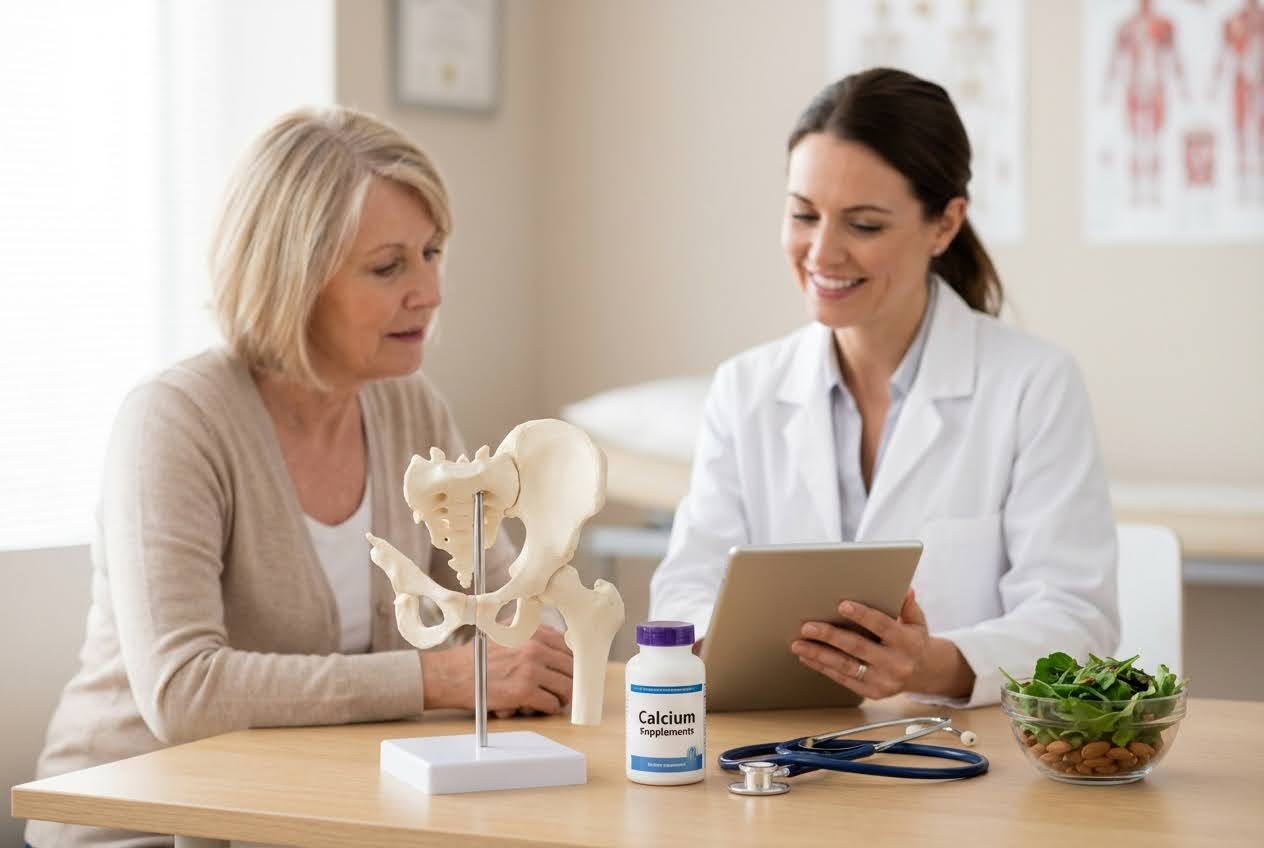 Nutritional Foundations for Skeletal Health
Calcium provides the building blocks bones need to stay strong. An endocrinologist recommends that postmenopausal women get 1,200 milligrams of calcium daily. Food sources work best: dairy products, fortified plant milks, canned sardines with bones, and leafy greens like kale. When diet falls short, calcium supplements can fill the gap. Split supplement doses into 500 mg portions for better absorption. Take calcium with food to reduce stomach upset.
Vitamin D helps the body absorb calcium from food. Without enough vitamin D, calcium passes through the digestive system unused. It is recommended that postmenopausal women take 800–1,000 IU of vitamin D daily. Vitamin K2 directs calcium into bones and away from arteries, where it could cause harm. Good K2 sources include fermented foods, egg yolks, and certain cheeses. Many bone health supplements now combine all three nutrients.
The National Osteoporosis Guideline Group strongly recommends regular weight-bearing and muscle-strengthening exercise for women at risk of fragility fractures.
Weight-bearing exercise forces bones to work against gravity, triggering bone-building cells called osteoblasts. Walking briskly for 30 minutes most days provides a solid foundation. Dancing, hiking, and stair climbing add variety while increasing bone stress. Low-impact options like elliptical training work for women with joint problems. Swimming and cycling, while excellent for cardiovascular health, do not stress bones enough to stimulate growth.
Muscles pull on bones during strength training, signaling the body to reinforce skeletal tissue. Start with light weights or resistance bands and gradually increase difficulty. Focus on major muscle groups: legs, hips, back, and arms. Two to three sessions per week produce measurable improvements in bone density. A physical therapist can design safe programs for women with existing osteoporosis.
Preventing falls matters as much as building bone strength. Tai chi improves balance and reduces fall risk by up to 50% in older adults. Yoga increases flexibility and body awareness. Simple exercises like standing on one foot while brushing teeth build stability over time. Strong ankles and core muscles help women catch themselves before falls become fractures.
When lifestyle changes are not enough, medications can help. Bisphosphonates like alendronate and risedronate slow bone breakdown. These drugs reduce hip fracture risk by 35–50% in high-risk women. Newer medications like denosumab and romosozumab actually build new bone. Treatment choice depends on fracture risk, other health conditions, and personal preferences. doctronic.tech offers 24/7 telehealth consultations where women can discuss medication options with licensed physicians.
HRT replaces the estrogen that menopause takes away. It effectively prevents bone loss when started near menopause. The decision to use HRT involves weighing bone benefits against potential risks for breast cancer and blood clots. Women with severe menopausal symptoms may find that HRT addresses multiple concerns at once. Timing matters: starting HRT within 10 years of menopause or before age 60 maximizes bone benefits while minimizing risks.
Small daily choices add up to major bone protection over time. Quit smoking: bone density improves within months of stopping. Limit alcohol to one drink per day or less. Remove tripping hazards from the home: loose rugs, cluttered walkways, and poor lighting cause preventable falls. Wear supportive shoes with non-slip soles. Get regular vision checks since poor eyesight increases fall risk. Maintain a healthy weight: being underweight reduces bone density while excess weight strains joints.
Women can lose up to 10–15% of their bone density in the first five to seven years after menopause. The rate slows after this initial period but continues throughout life without intervention.
Some medications can actually rebuild bone, not just slow loss. Lifestyle changes combined with proper treatment can improve bone density scores over time, though results vary by individual.
Research on calcium supplements and heart disease shows mixed results. Getting calcium from food sources appears safest. Women who need supplements should take divided doses and ensure adequate vitamin D intake.
High-impact activities like jumping, running on hard surfaces, and exercises involving forward bending or twisting of the spine can increase fracture risk. A physical therapist can recommend safe alternatives.
Women with normal bone density can wait about 5 years between scans. Those with osteopenia should test every one to two years. Women on osteoporosis medication typically get scans every two years to monitor treatment effectiveness.
Bone loss after menopause is common but not inevitable. Early screening, proper nutrition, targeted exercise, and medical treatment when needed can protect women from fractures and maintain quality of life. For personalized guidance on bone health, visit doctronic.tech for AI-powered consultations and affordable telehealth visits with licensed doctors available around the clock.
Understanding Airsupra Side EffectsAirsupra is a prescription inhaler used as a rescue medication to relieve asthma symptoms in adults aged 18 years and older. It is not [...]
Read MoreUnderstanding Budesonide Interactions for Safe UsageBudesonide is a corticosteroid medication used to treat conditions like asthma, Crohn's disease, and ulcerative [...]
Read MoreUnderstanding Xolair Interactions for Safe UsageXolair (omalizumab) treats severe allergic asthma, chronic hives, and nasal polyps. When starting this medication, patients [...]
Read More