

7 Common and Serious Side Effects of Airsupra
Meta Description: Learn about the 7 common and serious side effects of Airsupra and how to manage risks like oral thrush or heart issues through proper inhaler [...]
Read MoreEstrogen decline during perimenopause triggers around 2% collagen loss per year, with up to 30% occurring in the first five years after menopause, causing significant changes in skin thickness and elasticity
Approximately 50–60% of women experience dry skin during this transition, making barrier repair a top priority
Hormonal fluctuations can cause acne, sensitivity, and hyperpigmentation to appear simultaneously
Targeted ingredients like retinoids, hyaluronic acid, and vitamin C address specific perimenopausal skin concerns
Lifestyle factors, including diet, sun protection, and stress management, directly impact skin health during midlife
Professional treatments and hormone therapy options exist for women seeking more intensive solutions
Your skin starts behaving differently in your late thirties or early forties, and nobody warned you. Breakouts appear alongside wrinkles. Dry patches show up next to oily zones. Products that worked for years suddenly irritate your face. These confusing changes often signal perimenopause, a distinct biological phase that can last four to eight years before menopause officially begins.
Perimenopause is a distinct biological phase with its own set of needs, separate from menopause itself, characterized by fluctuating needs across skin, hair, sleep, mood, and intimacy. Understanding what happens beneath the surface helps women address these skin problems effectively. doctronic.tech can help women understand their symptoms and determine when professional guidance might be needed.
Estrogen does far more than regulate reproductive cycles. This hormone directly stimulates collagen synthesis, the protein responsible for skin's firmness and bounce. As estrogen levels begin their unpredictable decline during perimenopause, collagen production slows dramatically.
The numbers are striking: women may lose up to 30% of their skin's collagen in the first five years after menopause, rather than during perimenopause, affecting skin thickness and elasticity. This loss doesn't happen gradually. It accelerates rapidly once estrogen drops, which explains why skin seems to age suddenly rather than slowly. The dermis, your skin's structural layer, thins noticeably during this period.
Perimenopause isn't a steady hormonal decline. Estrogen and progesterone levels swing wildly, sometimes higher than normal, sometimes crashing low. These fluctuations wreak havoc on the skin barrier, the protective outer layer that keeps moisture in and irritants out.
When the barrier weakens, skin loses water faster and reacts to products it previously tolerated. Androgens, which remain relatively stable while estrogen drops, can suddenly dominate. This hormonal imbalance triggers oil production in some areas while leaving others parched.
Dry skin becomes the most common complaint during this transition. Around 55% of women reported experiencing dry skin during perimenopause and menopause. This isn't ordinary dryness that a heavier moisturizer fixes. The skin's ability to produce natural oils decreases, and its capacity to hold water diminishes.
Elasticity loss accompanies this dryness. Skin that once bounced back now shows creases that linger. Jawlines soften, and cheeks lose volume. These changes reflect both collagen loss and decreased hyaluronic acid production.
Adult acne during perimenopause catches many women off guard. These breakouts typically cluster along the jawline, chin, and lower cheeks, different from teenage acne patterns. The culprit is the androgen dominance mentioned earlier.
These blemishes tend to be deeper, more cystic, and slower to heal than adolescent pimples. They often leave behind dark marks that persist for months. Treating perimenopausal acne requires different strategies than teenage breakouts.
Skin that never reacted to anything suddenly flares at the slightest provocation. Rosacea symptoms may worsen or newly appear during perimenopause. Flushing and hot flashes leave visible redness that lingers.
The compromised barrier makes skin vulnerable to ingredients it once handled easily. Fragrances, certain preservatives, and active ingredients may now cause stinging or burning. This sensitivity requires simplifying routines rather than adding more products.
Dark spots multiply during perimenopause. Melasma, those patchy brown areas on the cheeks and forehead, often worsens with hormonal fluctuations. Sun damage accumulated over decades becomes more visible as cell turnover slows.
These pigmentation issues prove stubborn to treat. They require consistent, long-term approaches rather than quick fixes.
Retinoids remain the gold standard for aging skin. They speed cell turnover, stimulate collagen production, and help fade dark spots. Prescription tretinoin delivers the strongest results, but over-the-counter retinol works well for sensitive skin.
Start slowly with retinoids during perimenopause. Apply every third night initially, building tolerance over months. The increased sensitivity of perimenopausal skin means irritation happens more easily than before.
Hyaluronic acid holds up to 1,000 times its weight in water molecules, making it essential for dehydrated perimenopausal skin. Apply it to damp skin and seal with a moisturizer for best results.
Ceramides repair the damaged skin barrier. These lipids naturally exist in healthy skin but decrease with age. Products containing ceramides help restore the protective function that keeps moisture locked in.
Vitamin C serves double duty during perimenopause. It brightens existing dark spots while protecting against future damage. This antioxidant also supports collagen synthesis, addressing the production decline.
Choose stable vitamin C formulations and apply them in the morning before sunscreen. The combination provides powerful protection against environmental aging.
 Lifestyle Adjustments to Support Aging Skin
What you eat shows on your face, especially during hormonal transitions. Sugar and refined carbohydrates trigger inflammation that worsens acne and accelerates aging. Omega-3 fatty acids from fish, walnuts, and flaxseed support skin barrier function.
Phytoestrogens found in soy, flaxseed, and legumes may offer mild hormonal support. Staying hydrated helps skin retain moisture from the inside out.
Sun protection becomes non-negotiable during perimenopause. UV exposure accelerates collagen breakdown and worsens hyperpigmentation. Thinner, more vulnerable skin burns faster than before.
Use broad-spectrum SPF 30 or higher, ideally SPF 50, daily, even on cloudy days. Reapply every two hours during extended outdoor time. This single habit prevents more aging than any expensive serum.
Cortisol, the stress hormone, triggers inflammation, breakouts, and barrier damage. Perimenopause often coincides with major life stressors, creating a perfect storm for skin problems.
Stress management directly impacts skin health. Sleep, exercise, and relaxation techniques reduce cortisol levels. doctronic.tech offers resources to help women understand the connection between stress and skin symptoms.
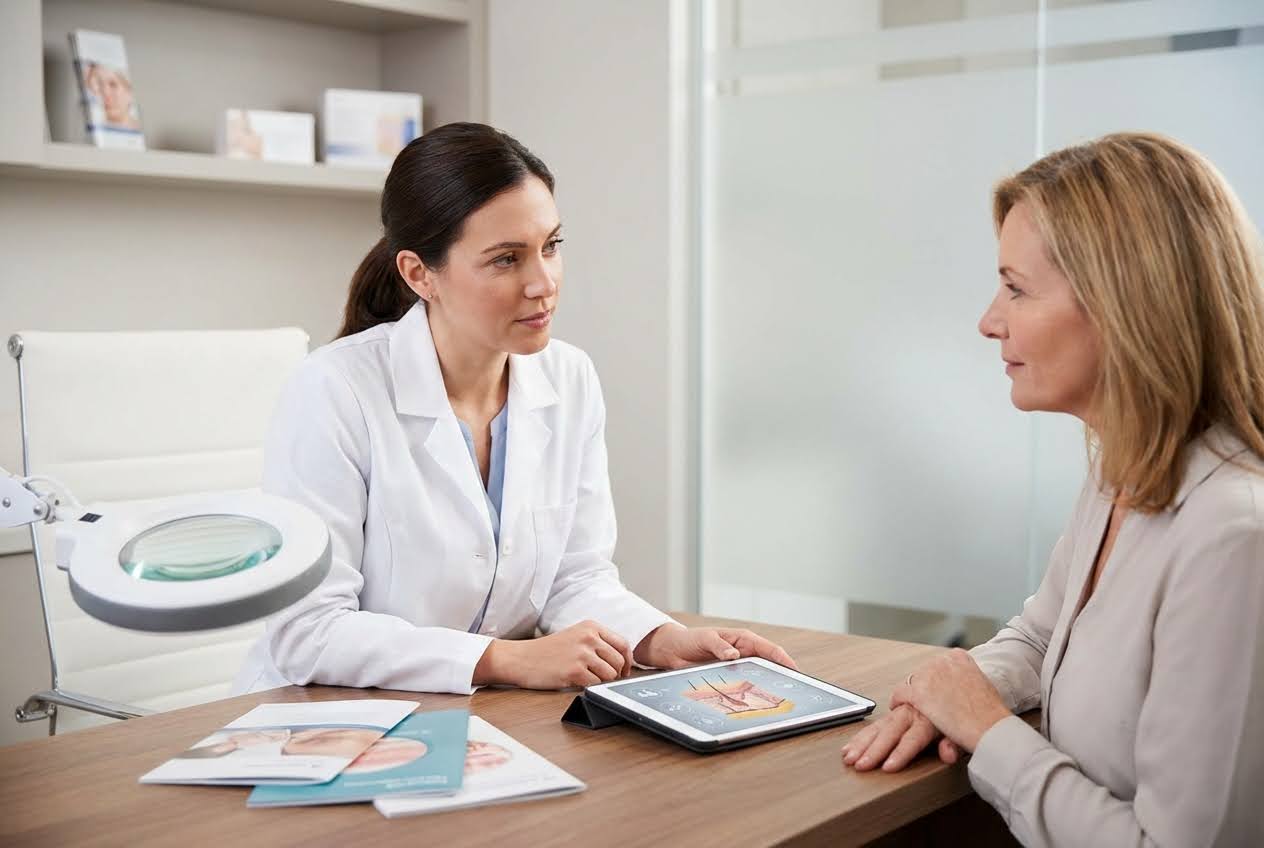
When home care isn't enough, dermatological treatments offer more intensive solutions. Chemical peels address hyperpigmentation and texture issues. Laser treatments stimulate collagen production at deeper levels.
Microneedling creates controlled micro-injuries that trigger healing responses. Radiofrequency treatments tighten sagging skin without surgery. A dermatologist can recommend appropriate procedures based on individual concerns and skin type.
Hormone replacement therapy can dramatically improve skin quality for some women. Estrogen replacement supports collagen production and skin hydration. Many women report plumper, more resilient skin after starting HRT.
This option requires careful consideration of individual health factors. Women considering HRT should discuss the risks and benefits with their healthcare provider, as the guidelines from the North American Menopause Society emphasize personalized dosing and regular review. doctronic.tech can help women prepare questions and understand their options before medical consultations.
Most women notice skin changes in their late thirties to mid-forties, though timing varies significantly based on individual factors and genetics.
No. Perimenopausal acne requires gentler approaches because the skin is simultaneously dry and sensitive. Harsh acne treatments often make things worse.
Perimenopause can last four to eight years. Skin changes often stabilize after menopause, though collagen loss continues at a slower rate.
Yes. Most women need to add hydrating ingredients, use gentler formulations, and prioritize barrier repair while still addressing concerns like acne or dark spots.
No. Many women see significant improvement through targeted skincare, lifestyle changes, and professional treatments without hormone therapy.
Perimenopausal skin changes are driven by hormonal fluctuations that simultaneously affect collagen, hydration, and barrier strength. With targeted skincare, smart lifestyle adjustments, and personalized medical guidance when needed, these changes are manageable. For tailored support and help understanding your symptoms, doctronic.tech offers convenient AI-powered consultations to guide your next steps.
Meta Description: Learn about the 7 common and serious side effects of Airsupra and how to manage risks like oral thrush or heart issues through proper inhaler [...]
Read MoreMeta Description: Learn about 8 budesonide interactions and what to avoid when you’re taking budesonide, including grapefruit and common drugs, to ensure your treatment is [...]
Read MoreMeta Description: Learn about these 7 Xolair interactions and what to avoid when you’re taking Xolair to safely manage your asthma, chronic hives, or nasal polyp [...]
Read More