

7 Common and Serious Side Effects of Airsupra
Meta Description: Learn about the 7 common and serious side effects of Airsupra and how to manage risks like oral thrush or heart issues through proper inhaler [...]
Read MoreLumbar traction creates space between vertebrae to reduce pressure on compressed nerves and discs
Manual traction produced comparable short-term pain relief to conventional physiotherapy for radicular back pain, but there was no significant long-term difference
Approximately 35–40% of physical therapists in the United States use traction as part of treatment protocols
Traction works best when combined with exercise, posture correction, and professional guidance
At-home devices carry risks without proper supervision and may not suit everyone's condition
Back pain affects millions of people seeking answers every year. Lumbar traction ranks among the most discussed treatments, but does it actually help? The short answer: yes, for specific conditions and when used correctly. This spinal decompression technique has been around for decades, yet confusion persists about who benefits most and how to use it safely. Understanding what traction can and cannot do helps patients make informed decisions about their recovery. doctronic.tech offers resources to help people understand their back pain and explore treatment options with AI-powered medical guidance.
Lumbar traction applies a pulling force to the spine, creating space between vertebrae. This mechanical separation reduces pressure on compressed structures like discs and nerve roots. The treatment aims to relieve pain by addressing the physical source of compression rather than masking symptoms.
When traction pulls on the lower spine, several things happen simultaneously. The space between vertebrae increases, allowing bulging disc material to retract toward its normal position. Stretched muscles and ligaments receive relief from constant tension. Nutrient-rich fluid flows more freely into disc spaces, promoting healing. The negative pressure created during decompression can draw herniated disc material away from nerve roots, reducing inflammation and pain signals.
Physical therapists deliver manual traction using their hands to apply controlled pulling forces. This approach allows real-time adjustments based on patient feedback and tissue response. Mechanical traction uses motorized tables or devices that provide consistent, measurable force over longer periods. About 35–40% of physical therapists in the United States reported using traction as part of their treatment protocols. Both methods have their place depending on the condition being treated and patient preferences.
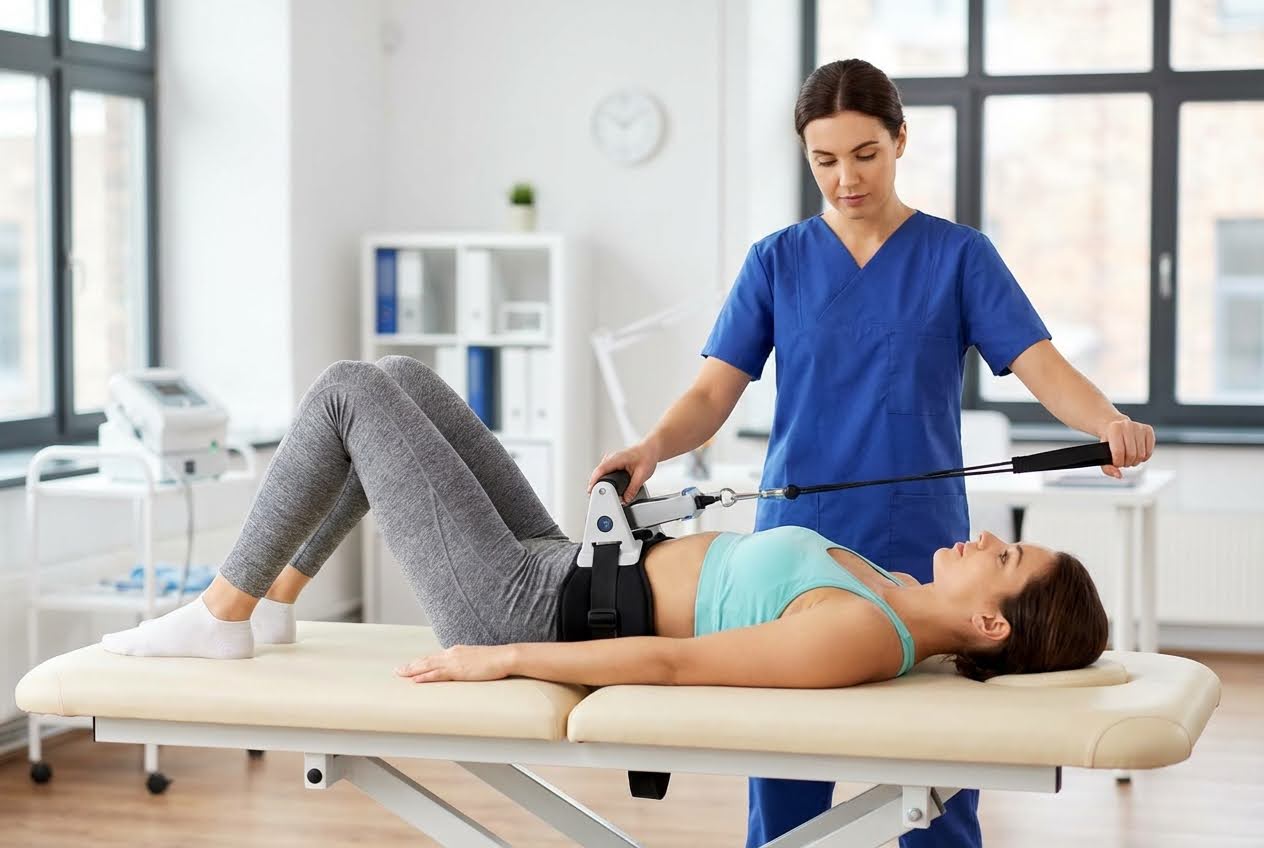 Core Benefits and Targeted Conditions
Traction does not help all types of back pain equally. Certain conditions respond dramatically better than others, making proper diagnosis essential before starting treatment.
Disc herniations occur when the soft inner material pushes through the outer ring, often pressing on nearby nerves. Traction creates negative pressure that can help retract this bulging material. Patients with confirmed disc herniations on imaging often experience meaningful relief when traction is applied correctly and consistently.
Sciatica describes pain radiating down the leg from compressed nerve roots in the lower spine. Manual traction provided short-term pain improvement similar to conventional physiotherapy for patients with radicular symptoms. This research supports traction as a useful adjunct for nerve-related back pain when used appropriately.
Age-related disc degeneration causes gradual height loss and reduced intervertebral disc height and cushioning. Traction can temporarily restore some of this lost space, providing symptom relief. The treatment is most effective when combined with a broader program that includes strengthening exercises and lifestyle modifications.
The evidence on lumbar traction is mixed but increasingly favorable for specific applications. Understanding what research shows helps set realistic expectations.
Traction provides meaningful short-term pain reduction. The challenge lies in maintaining those benefits over the long term without ongoing treatment. Patients who combine traction with active rehabilitation typically see better sustained results than those using traction alone. The temporary relief traction provides creates a window for other treatments to work more effectively.
Exercise and postural correction may be the most effective treatments for low back pain and sciatica. Traction should not replace active treatment but rather complement it. The best outcomes occur when traction reduces acute pain enough for patients to participate in strengthening and mobility exercises.
Traction is generally safe when applied correctly, but certain conditions make it dangerous. Knowing who should avoid this treatment prevents serious complications.
People with spinal instability, fractures, tumors, or severe osteoporosis should never undergo traction. Pregnancy is a relative, not absolute, contraindication - gentle traction may be used in limited cases under medical supervision. Active infections, certain vascular conditions, and recent spinal surgery also disqualify patients. Anyone considering traction should first get a proper diagnosis from doctronic.tech or their healthcare provider.
Common side effects include temporary muscle soreness and increased stiffness immediately after treatment. These typically resolve within hours. More serious risks include nerve damage, disc injury, and worsening of underlying conditions when traction is applied inappropriately. Proper screening and professional supervision minimize these risks significantly.
Consumer traction devices have flooded the market, promising relief without clinic visits. Understanding their limitations helps patients make safer choices.
Inversion tables flip users upside down, using body weight for traction. Portable traction belts wrap around the hips and apply pulling force through straps. Both can provide some relief for mild symptoms. Neither offers the precision or safety of professional treatment. Blood pressure changes during the inversion pose risk for people with cardiovascular conditions.
A trained therapist adjusts force, duration, and angle based on individual response. They monitor for warning signs and modify treatment as conditions change. Home devices cannot replicate this personalized approach. Patients using home traction should first learn proper technique from a professional and understand when to stop.
Traction is most effective as one component of a multifaceted approach to back pain recovery. Relying on it exclusively limits results and may delay proper healing.
Effective recovery combines traction with targeted exercises that strengthen core muscles supporting the spine. Posture correction addresses the habits that contributed to disc problems initially. Manual therapy techniques like massage and joint mobilization complement traction's effects. Education about body mechanics prevents re-injury during daily activities.
doctronic.tech helps patients understand their conditions and explore treatment options through AI-powered consultations available 24/7. Getting personalized guidance about whether lumbar traction fits into an individual's recovery plan saves time and prevents unnecessary treatments.
Most sessions last 15-30 minutes, depending on the treatment method and patient tolerance. Mechanical traction often lasts longer than manual techniques. Therapists typically start with shorter durations and increase time as patients adapt.
Yes, if applied to the wrong condition or with excessive force. People with spinal instability or certain disc problems may experience increased pain. Proper diagnosis before treatment prevents this complication.
Most patients notice some improvement within 6 to 10 sessions. Significant, lasting relief often requires 12 to 20 treatments combined with active rehabilitation. Individual responses vary with the severity of the condition and overall health.
Many insurance plans cover traction when prescribed by a physician and performed by a licensed therapist. Coverage varies by plan and diagnosis. Consulting the insurance provider before initiating treatment helps avoid unexpected costs.
Traction does not cure herniations but can significantly reduce symptoms by relieving pressure on nerves. Many disc herniations improve over time with conservative treatment, including traction. Surgery becomes unnecessary for most patients who respond well to non-invasive approaches.
Lumbar traction helps with back pain when used for the right conditions under proper supervision. It is most effective for disc herniations, sciatica, and nerve compression when combined with exercise and posture correction, rather than used alone.
For personalized guidance about back pain treatment options, visit doctronic.tech to access free AI doctor consultations or affordable telehealth visits with licensed physicians available around the clock.
Meta Description: Learn about the 7 common and serious side effects of Airsupra and how to manage risks like oral thrush or heart issues through proper inhaler [...]
Read MoreMeta Description: Learn about 8 budesonide interactions and what to avoid when you’re taking budesonide, including grapefruit and common drugs, to ensure your treatment is [...]
Read MoreMeta Description: Learn about these 7 Xolair interactions and what to avoid when you’re taking Xolair to safely manage your asthma, chronic hives, or nasal polyp [...]
Read More