

7 Common and Serious Side Effects of Airsupra
Meta Description: Learn about the 7 common and serious side effects of Airsupra and how to manage risks like oral thrush or heart issues through proper inhaler [...]
Read MoreJoint pain during perimenopause affects approximately 40% to 70% of women due to declining estrogen levels
Estrogen receptors exist in joints, muscles, and bones, which explains why hormonal changes cause widespread aches
Morning stiffness and pain in the hands, hips, and knees are the most common symptoms
Anti-inflammatory foods, low-impact exercise, and quality sleep can significantly reduce discomfort
Medical options include hormone replacement therapy and supplements like glucosamine and omega-3s
Persistent or severe joint pain warrants a visit to a healthcare provider to rule out other conditions
That new ache in your knees when you climb stairs? The stiffness in your fingers every morning? These symptoms aren't random. Joint pain during perimenopause is one of the most common yet least discussed experiences women face during this transition. 32% of women experiencing menopause symptoms report joint or muscle pain. The actual numbers may be even higher; between 40% and 70% of perimenopausal women experience this discomfort.
The good news? Understanding why this happens gives women real power to manage it. This isn't something to simply accept or suffer through silently. With the right knowledge and strategies, most women can find significant relief.
The link between hormonal changes and joint health is direct and well-documented. As estrogen levels begin their decline during perimenopause, the body responds in ways that directly affect joint comfort and function.
Estrogen does far more than regulate reproductive functions. We have estrogen receptors in every organ and tissue of the body - including our muscles, bones, and joints. When we experience estrogen decline in menopause, our body feels it. Joint aches occur.
This hormone helps maintain synovial fluid, which cushions joints. Think of synovial fluid as oil in an engine. When estrogen drops, this fluid becomes less abundant, and its composition can change, reducing its ability to protect cartilage surfaces. The result is thatmany women describe a grinding, aching sensation many women describe.
Estrogen also has natural anti-inflammatory properties. During perimenopause, hormone levels don't just decline - they fluctuate wildly from day to day and week to week. These swings can trigger inflammatory responses throughout the body, and joints often bear the brunt of this inflammation. Women may notice their pain varies in intensity, sometimes feeling better for days before flaring up again.
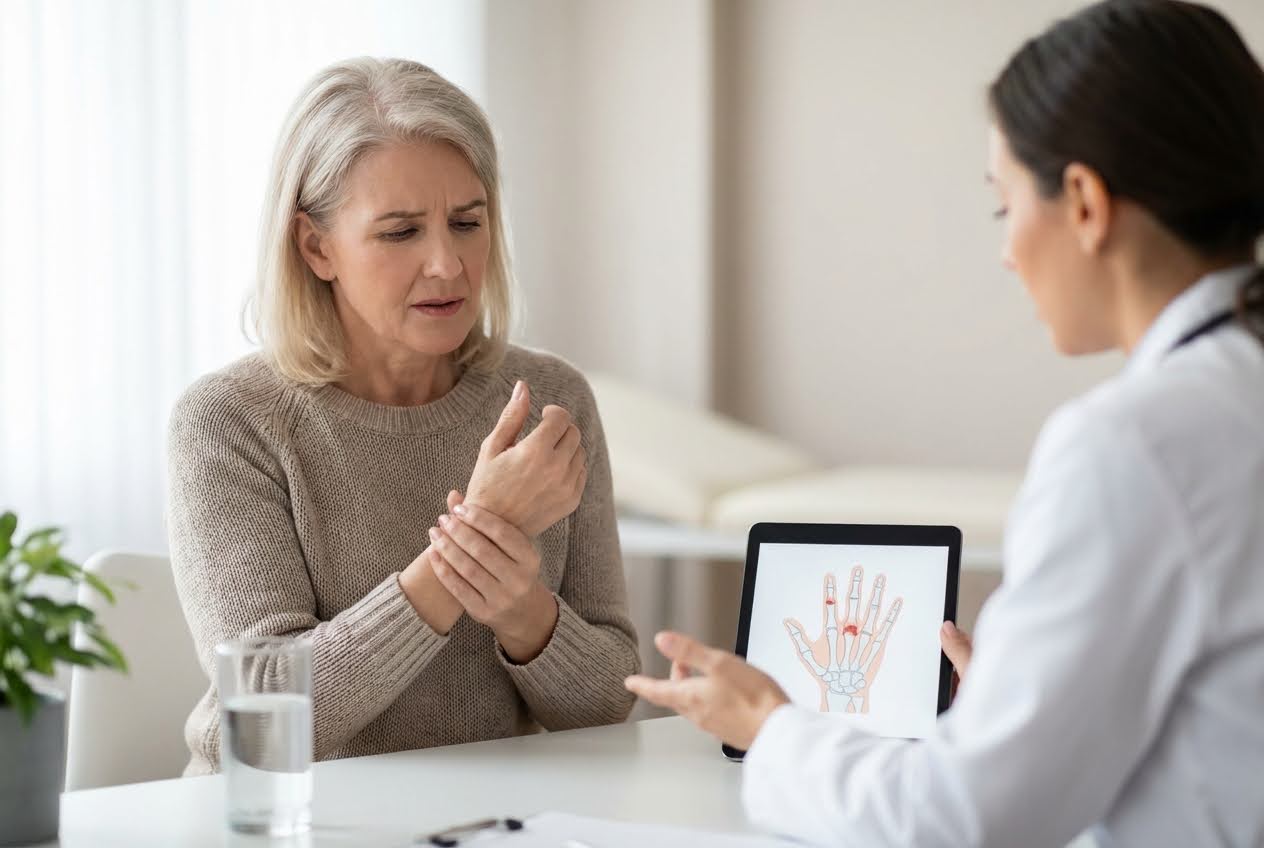 Common Symptoms and Affected Areas
Recognizing perimenopausal joint symptoms helps women understand what they're experiencing and communicate effectively with healthcare providers.
Many women wake up feeling like their joints have rusted overnight. This morning stiffness typically improves with movement but can last anywhere from a few minutes to an hour. Range of motion may decrease gradually, making activities like reaching overhead or bending down more difficult. Some women also notice swelling around joints, particularly in the hands and fingers.
The hands are the most frequently affected area, with women reporting stiffness and aching in the fingers and wrists. Hips and knees follow closely, creating challenges with walking, climbing stairs, and getting up from seated positions. The spine, shoulders, and ankles can also be involved. Pain often occurs in multiple joints simultaneously rather than in a single area.
Here's where things get tricky. Perimenopausal joint discomfort and osteoarthritis share many symptoms, but they're different conditions requiring different approaches. Osteoarthritis involves actual cartilage breakdown and joint damage that can be seen on X-rays. Perimenopausal joint pain often occurs without visible structural changes.
Key differences include timing and pattern. Perimenopausal pain often fluctuates with hormonal cycles and may affect joints symmetrically on both sides of the body. Osteoarthritis tends to be more constant and frequently affects one joint more severely than others. Age matters too - while both can occur during the perimenopausal years, osteoarthritis typically worsens progressively, while hormonal joint pain may lessen or stabilize after menopause is complete. Doctronic can help women track their symptoms and understand whether they might be experiencing hormonal changes or something else entirely.
The most effective approach to perimenopausal joint pain combines multiple lifestyle strategies. No single change works magic on its own, but together they create real improvement.
Food choices directly impact inflammation levels. Focus on fatty fish like salmon and sardines, leafy greens, berries, nuts, and olive oil. These foods contain compounds that actively reduce inflammation. Equally important: limit processed foods, refined sugars, and excessive alcohol, all of which promote inflammatory responses.
Hydration matters more than most women realize. Joints need adequate fluid to maintain their cushioning properties. Aim for at least 2 liters (roughly 8 8-ounce glasses) of water daily, and more during exercise or hot weather.
Movement is medicine for aching joints. Swimming, cycling, and walking provide cardiovascular benefits without stressing joints. Strength training builds muscle that supports and protects joints from further strain. Yoga and tai chi improve flexibility while reducing stress hormones that worsen inflammation.
The key is consistency rather than intensity. Thirty minutes of moderate activity most days beats occasional intense workouts that leave joints screaming.
Chronic stress elevates cortisol, which increases inflammation throughout the body. Practices like deep breathing, meditation, or simply spending time in nature can lower stress hormones and reduce joint pain.
Sleep is when the body repairs itself. Poor sleep quality - common during perimenopause - prevents this healing process. Maintain a cool bedroom, limit screens before bed, and keep a consistent sleep schedule. Women struggling with sleep issues can consult with Doctronic to explore potential solutions.
When lifestyle changes aren't enough, medical interventions can provide additional relief.
HRT addresses the root cause of perimenopausal joint pain by stabilizing estrogen levels. Many women experience significant improvement in joint symptoms within weeks of starting treatment. HRT isn't right for everyone, and risks must be weighed against benefits based on individual health history. A thorough conversation with a healthcare provider helps determine if this option makes sense.
Several supplements show promise for joint health. Glucosamine may help maintain cartilage and reduce pain, though results vary between individuals. Omega-3 fatty acids from fish oil have been documented to have anti-inflammatory effects. Vitamin D supports bone health and may reduce joint pain, particularly in women who are deficient.
Always discuss supplements with a healthcare provider before starting, as they can interact with medications and aren't appropriate for everyone.
Seek medical attention if joint pain is severe, affects daily activities, or doesn't improve with basic self-care measures. Red flags include sudden joint swelling, warmth, or redness, which could indicate infection or other serious conditions. Persistent pain in a single joint warrants investigation to rule out injury or localized problems.
Women shouldn't dismiss perimenopausal joint pain as something they must simply endure. Effective treatments exist, and getting a proper evaluation ensures nothing else is causing the symptoms.
Declining and fluctuating estrogen levels reduce the natural lubrication in your joints and trigger inflammatory responses. Estrogen receptors exist throughout your musculoskeletal system, so hormonal changes directly impact joint comfort.
Many women find that their joint pain stabilizes or improves once hormone levels settle after menopause is complete. The fluctuations during perimenopause often cause more symptoms than the lower but stable hormone levels afterward.
High-impact activities might aggravate symptoms, but low-impact exercise typically reduces joint pain by improving circulation, strengthening supporting muscles, and maintaining flexibility. The key is choosing the right type and intensity of movement.
Supplements like glucosamine, omega-3 fatty acids, and vitamin D may help some women, but results vary. Discuss options with a healthcare provider before starting any supplement regimen to ensure safety and appropriateness for your situation.
Perimenopausal joint pain often fluctuates with hormonal cycles and affects multiple joints symmetrically. Arthritis tends to be more constant and progressive. A healthcare provider can perform tests and imaging to determine the cause.
Joint pain during perimenopause is common, treatable, and doesn't have to control your life. Understanding the hormonal connection empowers women to take action through lifestyle changes, supplements, or medical treatments that bring real relief.
For personalized guidance on managing perimenopausal symptoms, Doctronic offers free AI doctor visits that remember your health history and provide recommendations based on the latest medical research.
Meta Description: Learn about the 7 common and serious side effects of Airsupra and how to manage risks like oral thrush or heart issues through proper inhaler [...]
Read MoreMeta Description: Learn about 8 budesonide interactions and what to avoid when you’re taking budesonide, including grapefruit and common drugs, to ensure your treatment is [...]
Read MoreMeta Description: Learn about these 7 Xolair interactions and what to avoid when you’re taking Xolair to safely manage your asthma, chronic hives, or nasal polyp [...]
Read More