

7 Common and Serious Side Effects of Airsupra
Understanding Airsupra Side EffectsAirsupra is a prescription inhaler used as a rescue medication to relieve asthma symptoms in adults aged 18 years and older. It is not [...]
Read MoreMost herniated discs heal without surgery through physical therapy, medication, and rest within four to twelve weeks
Surgery becomes necessary when conservative treatments fail after six weeks or when neurological symptoms worsen
Cauda equina syndrome requires emergency surgery within 24 hours to prevent permanent damage
Microdiscectomy is the most common surgical option, with success rates between 90 and 95 percent
Post-surgical recovery requires commitment to physical therapy and lifestyle changes to prevent re-herniation
A herniated disc can turn simple movements into agonizing tasks. The shooting pain down your leg, the numbness in your foot, and the weakness that makes standing difficult: these symptoms disrupt every part of daily life. Most people recover without surgery, but some cases require surgical intervention to prevent permanent nerve damage. Understanding when herniated disc surgery is needed helps patients make informed decisions about their care. Doctronic offers free AI doctor visits that can help you understand your symptoms and determine whether you should seek specialist evaluation for your back pain.
A herniated disc occurs when the soft inner material of a spinal disc pushes through its tougher outer layer. This bulging material can press against nearby spinal nerves, causing pain that radiates into the arms or legs. The location of the herniation determines where symptoms appear. Lower back herniations typically cause sciatica, while neck herniations create pain and numbness in the shoulders and arms.
Most doctors start with non-surgical approaches because they work for the majority of patients. Physical therapy strengthens the muscles supporting the spine and improves flexibility. Anti-inflammatory medications reduce swelling around the affected nerve. Epidural steroid injections can provide temporary relief for severe cases. Doctronic can help patients understand these treatment options and track their symptoms over time.
About 80 to 90 percent of herniated disc patients improve within six weeks of starting conservative treatment. Complete recovery typically takes 6 weeks to 6 months. The body naturally absorbs some of the herniated material over time, reducing pressure on the nerve. Patients who follow their physical therapy programs and maintain activity restrictions typically see the best outcomes.
Surgery becomes a serious consideration when six to twelve weeks of conservative treatment produce no improvement. This timeframe allows enough time for natural healing while preventing prolonged suffering. Patients who show no response to physical therapy, medications, and injections may benefit from surgical evaluation. The key factor is whether symptoms remain severe enough to limit daily activities.
Worsening weakness, increasing numbness, or declining reflexes signal that nerve damage is progressing. These changes indicate the nerve compression is causing harm that may become permanent without intervention. Doctors use specific tests to measure nerve function and track changes over time. A foot drop or inability to lift the toes often indicates significant nerve involvement requiring prompt surgical consideration.
Some patients experience pain so severe that it prevents work, sleep, and basic self-care. When pain medications provide inadequate relief and symptoms persist despite aggressive conservative treatment, surgery offers a path forward. Quality of life considerations matter significantly in surgical decisions. A patient unable to care for their children or maintain employment may reasonably choose surgery earlier than someone managing symptoms adequately.
Cauda equina syndrome is a medical emergency requiring surgery within 24 hours of symptom onset. This condition occurs when a large disc herniation compresses the bundle of nerves at the base of the spine. Symptoms include severe low back pain, leg weakness on both sides, and changes in sensation around the groin area. Delayed treatment can result in permanent paralysis and loss of bladder function.
Inability to urinate or unexpected incontinence signals serious nerve compression requiring immediate evaluation. These symptoms indicate the nerves controlling bladder and bowel function are being damaged. Patients experiencing these changes should go directly to an emergency room. Time is critical because nerve function may not recover if compression continues too long.
Numbness in the areas that would contact a saddle: inner thighs, buttocks, and groin, indicates significant nerve involvement. Combined with progressive leg weakness, these symptoms suggest cauda equina syndrome or severe nerve compression. Patients should not wait to see if symptoms improve. Emergency surgical decompression offers the best chance of preserving nerve function.
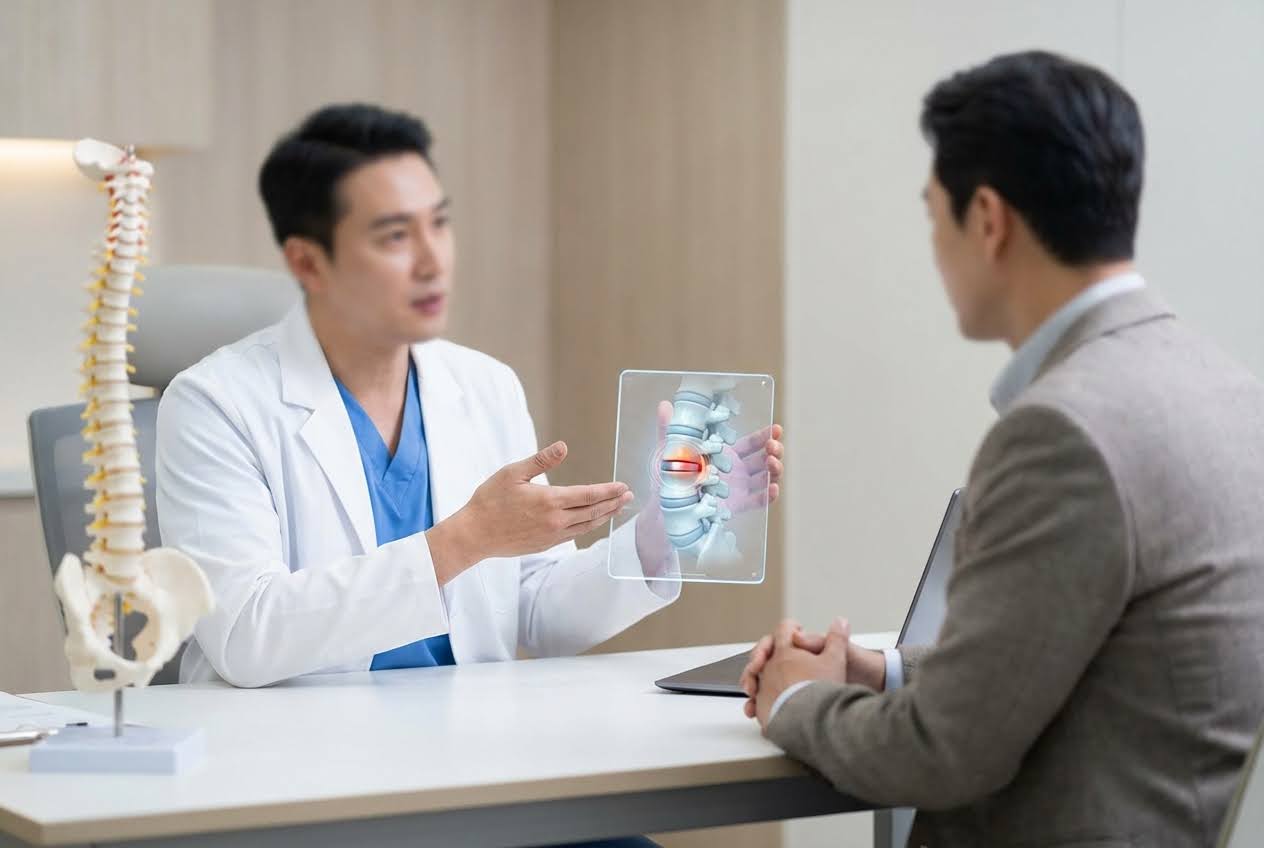 Common Surgical Procedures for Disc Herniation
Microdiscectomy remains the gold standard for herniated disc surgery. Surgeons use a small incision and a microscope to remove only the portion of the disc pressing on the nerve. Most patients go home the same day and return to light activities within two weeks. Success rates range from 90 to 95 percent for relieving leg pain. Doctronic can help patients prepare questions for their surgical consultations.
A laminectomy removes a small portion of the vertebral bone to create more space for the nerves. This procedure is often combined with a discectomy when bone spurs or thickened ligaments contribute to nerve compression. Recovery takes slightly longer than microdiscectomy alone. Patients typically need four to six weeks before returning to normal activities.
Artificial disc replacement preserves motion at the affected spinal level by inserting a mechanical disc. This option works best for younger patients with single-level disease and healthy adjacent discs. Spinal fusion permanently joins two vertebrae together, eliminating motion at that segment. Fusion remains appropriate for patients with instability or multiple-level disease. Both procedures have good long-term outcomes when patients are properly selected.
All surgeries carry risks, including infection, bleeding, and anesthesia complications. Specifically in spine surgery, nerve injury can occur, though rates remain below 2 percent in experienced hands. Some patients develop scar tissue that leads to recurrent symptoms. Recurrent disc herniation affects approximately 5 to 15 percent of patients within ten years of surgery.
Studies show 90 percent of patients report significant improvement in leg pain after microdiscectomy. Improvement in back pain is less predictable, with approximately 65-75% of patients reporting benefit. Most patients return to work within four to eight weeks of surgery. Long-term studies demonstrate that surgical patients often have better outcomes at one year compared to those who continued conservative treatment for the same duration.
The first two weeks focus on wound healing and pain management. Patients should walk regularly but avoid bending, lifting, and twisting. Most surgeons restrict driving until patients stop taking narcotic pain medications. Incision care involves maintaining cleanliness and monitoring for signs of infection.
Physical therapy typically begins two to four weeks after surgery. A structured program rebuilds core strength and teaches proper body mechanics. Patients who complete their full therapy course have lower rates of re-herniation. Therapy also addresses any muscle imbalances that may have contributed to the original injury.
Maintaining a healthy weight reduces stress on spinal discs. Proper lifting technique: bending at the knees rather than the waist protects the lower back. Regular exercise keeps supporting muscles strong. Avoiding prolonged sitting and using ergonomic workstations helps prevent future problems.
Microdiscectomy typically takes one to two hours. More complex procedures like fusion may require two to four hours. Most patients go home the same day or after one night in the hospital.
Microdiscectomy has a success rate of 90-95% in relieving leg pain. Back pain improvement is somewhat lower at around 70 percent. Proper patient selection significantly impacts outcomes.
Desk workers often return within two to four weeks. Jobs involving physical labor may require 8 to 12 weeks of recovery. Your surgeon will provide specific guidance based on your job requirements.
Yes. Physical therapy is essential for optimal recovery and preventing re-herniation. Most patients begin therapy two to four weeks after surgery and continue for six to twelve weeks.
Most herniated discs heal without surgery, but certain warning signs demand surgical evaluation. Patients experiencing progressive weakness, failed conservative treatment, or emergency symptoms like bladder dysfunction should seek immediate specialist care. For questions about your symptoms, visit Doctronic for a free AI consultation that can help guide your next steps toward relief.
Understanding Airsupra Side EffectsAirsupra is a prescription inhaler used as a rescue medication to relieve asthma symptoms in adults aged 18 years and older. It is not [...]
Read MoreUnderstanding Budesonide Interactions for Safe UsageBudesonide is a corticosteroid medication used to treat conditions like asthma, Crohn's disease, and ulcerative [...]
Read MoreUnderstanding Xolair Interactions for Safe UsageXolair (omalizumab) treats severe allergic asthma, chronic hives, and nasal polyps. When starting this medication, patients [...]
Read More