

7 Common and Serious Side Effects of Airsupra
Meta Description: Learn about the 7 common and serious side effects of Airsupra and how to manage risks like oral thrush or heart issues through proper inhaler [...]
Read MorePhytoestrogens from plant foods can help ease menopause symptoms by mimicking natural estrogen in the body
Soybeans, flaxseeds, and chickpeas rank among the best food sources of plant-based estrogens
Research shows mixed results on phytoestrogen effectiveness, making personalized guidance important
These foods offer benefits beyond hormone support, including better bone and heart health
Whole food sources are safer than supplements, but consulting a doctor first is always wise
When estrogen levels drop during menopause, many women experience hot flashes, mood changes, and sleep problems. The global menopause market has gained significant attention as more individuals seek relief from menopausal symptoms. Estrogen-rich foods have emerged as a popular natural remedy during this transition. These plant-based options contain compounds known as phytoestrogens, which can provide gentle support for the body. Understanding which foods contain these helpful compounds can make a real difference in daily comfort and long-term health.
Estrogen does far more than regulate the menstrual cycle. This hormone protects bones, keeps skin healthy, supports brain function, and helps maintain heart health. When the ovaries slow down estrogen production, the body notices. Symptoms like hot flashes, night sweats, and vaginal dryness often follow. The impact extends to daily life: roughly 50% of employed women experiencing menopause symptoms report some impact on work performance.
Phytoestrogens are plant compounds that look similar to human estrogen at the molecular level. They can attach to estrogen receptors in the body and produce weak estrogen-like effects. The two main types are isoflavones, found in soy foods, and lignans, found in seeds and whole grains. These compounds work much more gently than human estrogen or hormone replacement therapy.
Soy foods contain the highest levels of isoflavones among all plant foods. One cup of cooked soybeans provides about 90 milligrams of isoflavones. Tofu, made from soy milk, offers a versatile option for meals. Edamame, or young soybeans, make a simple snack. Asian populations who eat soy regularly tend to report fewer menopause symptoms than Western populations.
Chickpeas contain isoflavones in smaller amounts than soy but still offer meaningful benefits. A cup of cooked chickpeas provides fiber, protein, and phytoestrogens together. Hummus, made from mashed chickpeas, works well as a dip or spread. Adding chickpeas to salads, soups, or curries makes it easy to eat them regularly.
Lentils pack both lignans and isoflavones into a budget-friendly package. They cook faster than most beans and work in many dishes. Alfalfa sprouts contain coumestrol, another type of phytoestrogen. Sprinkle them on sandwiches or salads for a mild, crunchy addition.
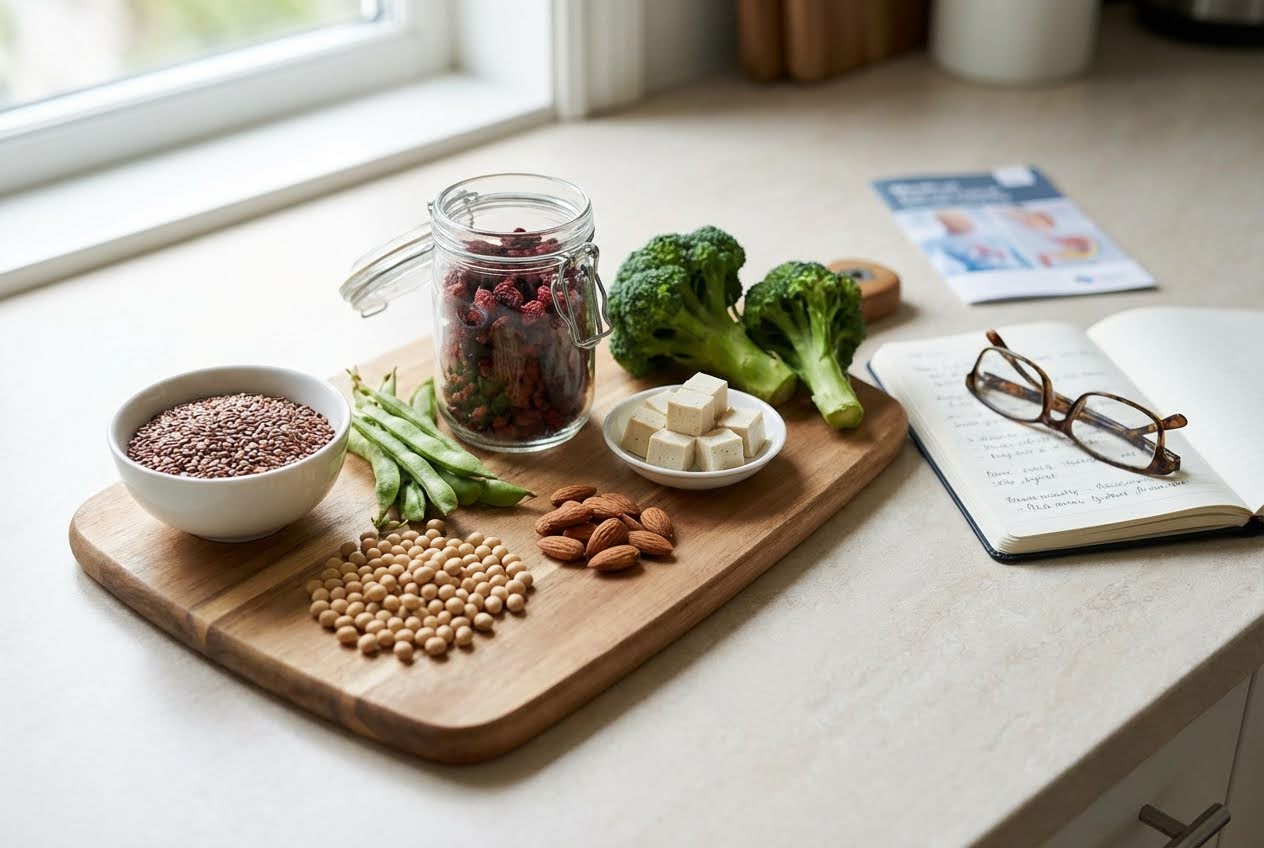 Seeds and Nuts High in Lignans
Flaxseeds contain more lignans than any other food: about up to 800 times more than most other plant foods. Just two tablespoons of ground flaxseed provide a significant dose. The seeds must be ground for the body to absorb the nutrients. Add ground flaxseed to smoothies, oatmeal, or yogurt daily.
Sesame seeds offer lignans along with calcium and healthy fats. Tahini, made from ground sesame seeds, works in dressings and sauces. Pumpkin seeds contain lower levels of lignans but provide zinc and magnesium. Both seeds make easy additions to meals or snacks.
Walnuts provide lignans plus omega-3 fatty acids that support brain and heart health. A small handful of daily offers benefits without too many calories. Pistachios contain a limited amount of phytoestrogens and make a satisfying snack. Both nuts work well in salads, baked goods, or eaten alone.
Broccoli and cauliflower contain compounds that help the body process estrogen properly. They support healthy hormone balance rather than adding more estrogen directly. These vegetables also provide fiber, vitamins, and cancer-fighting compounds. Aim for several servings per week.
Dried fruits contain concentrated phytoestrogens along with natural sugars and fiber. Prunes rank highest among dried fruits for lignan content. Dates and dried apricots offer smaller amounts but still contribute to daily intake. Use them as natural sweeteners or snacks.
Berries contain lignans and powerful antioxidants that protect cells from damage. Strawberries, cranberries, and raspberries all provide these benefits. Peaches contain small amounts of lignans and isoflavones and taste great fresh or frozen. These fruits add variety and natural sweetness to a phytoestrogen-rich diet.
Phytoestrogen-rich foods offer protection beyond hot-flash relief. Soy isoflavones may help slow bone loss that speeds up after menopause. The fiber and healthy fats in these foods support heart health by lowering cholesterol. Eating these foods regularly builds long-term protection.
Some studies suggest that phytoestrogens may not work for everyone, as research shows mixed results. Women who respond well often notice fewer and milder hot flashes after several weeks of regular consumption. Individual factors like gut bacteria and genetics affect how well the body uses these compounds.
Whole foods provide phytoestrogens in safe, natural amounts along with other nutrients. Supplements can deliver much higher doses that may cause problems. Stick with food sources rather than pills or powders. The body handles food-based phytoestrogens better than concentrated supplements.
Women with a history of breast cancer or hormone-sensitive conditions should talk to their doctors before adding lots of phytoestrogen-rich foods. Doctronic offers free AI doctor visits that can help answer initial questions about dietary changes. The platform remembers personal health history and provides guidance based on peer-reviewed medical research. For ongoing support, Doctronic also offers affordable telehealth visits with real doctors available around the clock.
Most women need 6 to 12 weeks of regular use before noticing changes. The body takes time to adjust, and results vary based on individual factors like gut health and genetics.
Yes, moderate amounts of these foods are safe for men. Studies show normal soy consumption does not affect male hormone levels or fertility.
This depends on individual circumstances. Some research suggests moderate soy intake may be safe, but women should discuss this with their oncologist before making changes.
Spreading phytoestrogen-rich foods throughout the day works better than eating them all at once. This keeps levels more steady in the body.
Most cooking methods preserve phytoestrogens well. Boiling may cause some loss of cooking water, so using that liquid in recipes helps retain nutrients.
Adding phytoestrogen-rich foods like soy, flaxseeds, and legumes to daily meals may help ease menopause symptoms naturally. These foods also support bone and heart health during a time when the body needs extra protection. For personalized guidance on managing menopause through diet and other approaches, visit Doctronic for free AI consultations or affordable video visits with licensed doctors.
Meta Description: Learn about the 7 common and serious side effects of Airsupra and how to manage risks like oral thrush or heart issues through proper inhaler [...]
Read MoreMeta Description: Learn about 8 budesonide interactions and what to avoid when you’re taking budesonide, including grapefruit and common drugs, to ensure your treatment is [...]
Read MoreMeta Description: Learn about these 7 Xolair interactions and what to avoid when you’re taking Xolair to safely manage your asthma, chronic hives, or nasal polyp [...]
Read More