

7 Common and Serious Side Effects of Airsupra
Meta Description: Learn about the 7 common and serious side effects of Airsupra and how to manage risks like oral thrush or heart issues through proper inhaler [...]
Read MoreBone density loss in the spine increases fracture risk, but targeted exercises can stimulate bone growth through Wolff's Law
Low-impact weight-bearing activities and resistance training strengthen vertebrae without dangerous stress
Avoid spinal flexion, twisting, and high-impact movements that can cause compression fractures
Balance training reduces fall risk, which is critical for preventing osteoporosis-related injuries
A long-term bone health plan combines exercise, nutrition, and professional guidance for the best results
A diagnosis of osteoporosis changes everything about how you should exercise. The spine, with its complex structure of vertebrae and discs, becomes particularly vulnerable when bone density drops. About 10% of adults aged 50 and over have osteoporosis of the hip or spine. That statistic represents millions of people who need safe, effective back-strengthening exercises.
The good news? Bones respond to stress by getting stronger. The right exercises can actually build bone density while protecting your spine from fractures. The wrong exercises can cause devastating injuries. This guide covers exactly which movements help your back and which ones to avoid entirely. For personalized guidance on managing osteoporosis symptoms, doctronic.tech offers AI-powered consultations that can help you understand your specific situation.
Osteoporosis literally means "porous bone." When it affects the spine, the vertebrae become honeycomb-like structures that can crumble under normal daily activities. Elderly patients need to understand that having an osteoporotic fracture is like having a heart attack of the bone. Compression fractures of the spine can occur from as simple an activity as bending to pick up groceries.
Osteoporosis-related bone breaks cost. Much of this expense comes from spinal fractures that lead to chronic pain, disability, and loss of independence.
Here's the principle that makes exercise worthwhile: Wolff's Law states that bones adapt to the loads placed on them. Apply controlled stress through exercise, and bone cells respond by building more bone tissue. Skip exercise, and bones continue to weaken. This biological response is why safe strengthening exercises for osteoporosis aren't optional - they're essential medicine.
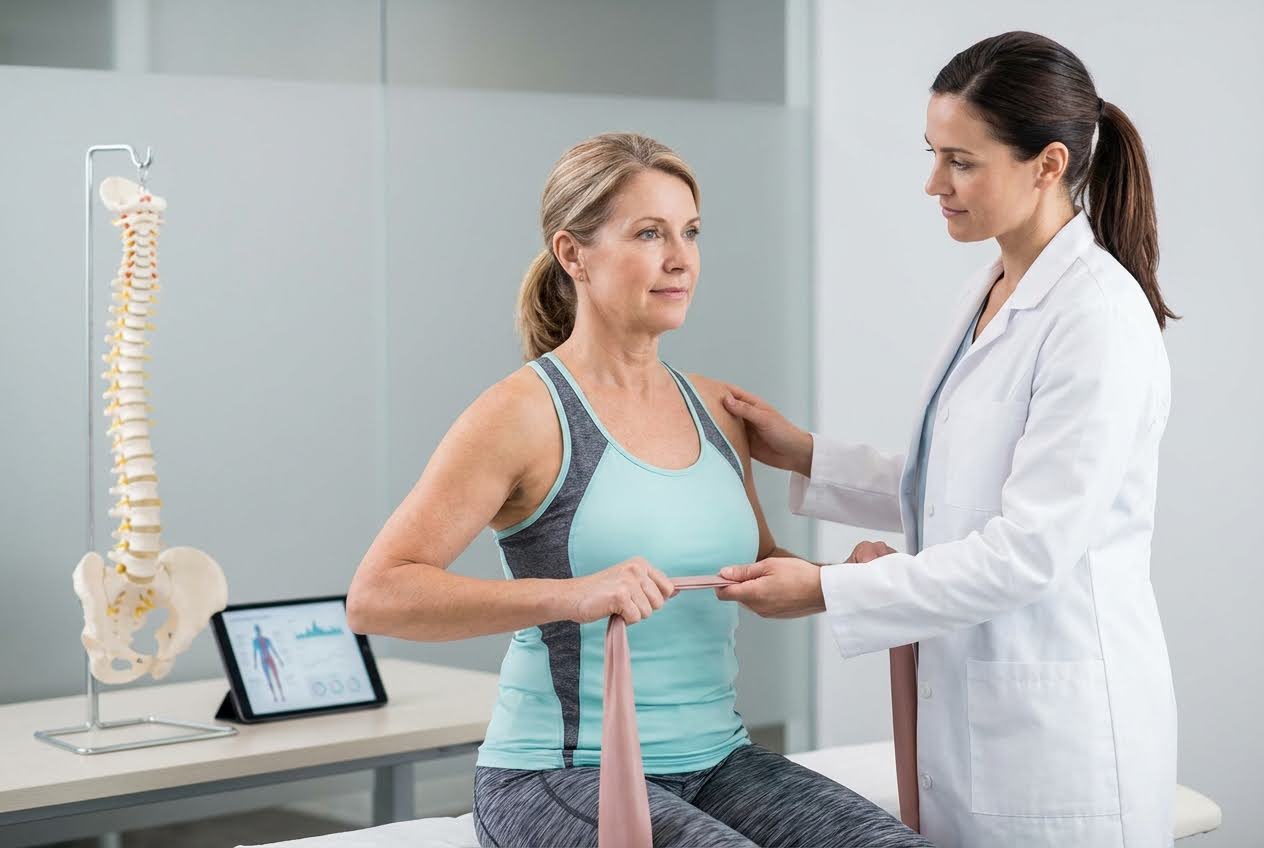 Core Weight-Bearing Exercises for Bone Growth
Weight-bearing exercise forces bones to work against gravity, triggering bone remodeling. Walking remains the gold standard for people with osteoporosis. Aim for 30 minutes most days at a pace that elevates your heart rate slightly. Stair climbing adds extra load to the spine and hips without impact stress.
Elliptical machines provide another excellent option. They create weight-bearing forces while eliminating the jarring impact of running or jumping. Swimming and cycling, while excellent for cardiovascular health, do not significantly stimulate bone growth because they are not weight-bearing activities.
The muscles running along your back - the posterior chain - directly support spinal health. Strengthening these muscles creates a protective corset around vulnerable vertebrae. Start with resistance bands before progressing to weights.
Effective exercises include:
Standing rows with resistance bands
Wall push-ups (progressing to incline push-ups)
Seated cable rows with light weight
Lat pulldowns with controlled movement
Keep resistance moderate and repetitions higher (12-15 per set). Heavy lifting with compromised bone density risks vertebral fractures.
These exercises strengthen the erector spinae muscles that run along your spine without placing excessive load on your vertebrae. For prone extensions, lie face-down and gently lift your chest a few inches off the floor. Hold for 5 seconds, then lower. This builds the muscles that maintain upright posture.
Bird-dogs require starting on hands and knees, then extending the opposite arm and leg while keeping your spine neutral. This exercise trains core stability and back strength simultaneously. Perform 10 repetitions on each side, focusing on controlled movement rather than speed.
Poor posture accelerates the progression of spinal problems in patients with osteoporosis. Rounded shoulders and a forward head position increase stress on already weakened vertebrae. Scapular retraction exercises counteract this pattern.
Stand against a wall with feet six inches forward. Press your shoulder blades back into the wall while keeping your chin tucked. Hold for 10 seconds. This simple exercise, done throughout the day, helps retrain postural muscles and reduce spinal strain. doctronic.tech can provide additional exercise recommendations based on your health history.
This section matters most. High-impact exercises and exercises involving forward bending or trunk rotation should be avoided to minimize fracture risk.
Exercises to eliminate completely:
Sit-ups and crunches (extreme spinal flexion)
Toe touches (loaded forward bending)
Golf and tennis (rotational forces)
Rowing machines (combined flexion and load)
Running, jumping, and aerobics classes with hopping movements create forces that weakened vertebrae cannot safely absorb. Replace these with walking, elliptical training, or stationary cycling. If you've always been active, this adjustment feels frustrating. Accept it as necessary protection.
Falls cause most osteoporosis-related fractures. Balance training reduces fall risk significantly. Start with simple exercises: stand on one foot while holding a chair, then progress to unsupported single-leg stands. Practice walking heel-to-toe in a straight line.
As balance improves, challenge yourself further. Stand on a folded towel to create an unstable surface. Close your eyes briefly during single-leg stands. These progressions train the proprioceptive system that keeps you upright.
Tai Chi's slow, controlled movements build balance while strengthening legs and core. Reduced fall rates in older adults who practice Tai Chi regularly. Find a class specifically designed for seniors or those with bone health concerns.
Yoga requires more caution. Many traditional poses involve deep forward bends or twisting that endanger osteoporotic spines. Seek instructors trained in osteoporosis modifications. Avoid poses like the seated forward fold, plow pose, and any deep twist.
Building bone density takes time - expect at least 6 months to several years before measurable changes occur. Consistency matters more than intensity. Three 30-minute sessions weekly beats one exhausting weekend workout.
Combine exercise with proper nutrition. Calcium and vitamin D support the bone-building process that exercise stimulates. Most adults need 1,200mg of calcium and 800–2,000 IU of vitamin D daily, depending on individual needs and medical advice. Get bone density scans every 1–2 years, or more often if recommended by your healthcare provider, to track progress.
Work with healthcare providers who understand osteoporosis exercise. Physical therapists can design individualized programs that account for your specific bone density levels and fracture history. doctronic.tech offers convenient telehealth consultations with doctors who can review your exercise plan and provide guidance on managing bone health safely.
Yes. Weight-bearing and resistance exercises stimulate bone remodeling through Wolff's Law. While results take 6-12 months to appear on scans, regular exercise can slow bone loss and even build new bone tissue.
Aim for weight-bearing activity most days (30 minutes of walking) and resistance training 2-3 times weekly. Balance exercises should happen daily, even if just for 5-10 minutes.
Both require significant modification. Avoid forward bending, deep twisting, and poses that load the spine in flexion. Work with instructors specifically trained in osteoporosis adaptations.
Doing traditional abdominal exercises like sit-ups and crunches. These create dangerous compression forces on weakened vertebrae and can cause fractures.
Yes, but with medical guidance. Exercise remains important for preventing future fractures, but your program needs careful design to protect healing bone. Consult your doctor before starting.
With osteoporosis, protecting your spine while strengthening it is essential. The right weight-bearing, resistance, and balance exercises can stimulate bone growth and reduce fracture risk, while flexion and high-impact movements should be avoided. Consistency, proper technique, and medical guidance make the difference. doctronic.tech can help you review your symptoms and build a safer, personalized bone health plan.
Meta Description: Learn about the 7 common and serious side effects of Airsupra and how to manage risks like oral thrush or heart issues through proper inhaler [...]
Read MoreMeta Description: Learn about 8 budesonide interactions and what to avoid when you’re taking budesonide, including grapefruit and common drugs, to ensure your treatment is [...]
Read MoreMeta Description: Learn about these 7 Xolair interactions and what to avoid when you’re taking Xolair to safely manage your asthma, chronic hives, or nasal polyp [...]
Read More