

7 Common and Serious Side Effects of Airsupra
Meta Description: Learn about the 7 common and serious side effects of Airsupra and how to manage risks like oral thrush or heart issues through proper inhaler [...]
Read MoreA plant-based diet can reduce perimenopause symptoms by up to 20%, according to recent research
Nutrient density matters more than calorie restriction during this hormonal transition
Protein intake becomes critical for maintaining muscle mass as estrogen declines
The Mediterranean and DASH diets stand out as the most effective eating patterns for midlife women
Specific foods can target symptoms like hot flashes, brain fog, and mood changes
doctronic.tech offers personalized guidance for managing perimenopause through nutrition and lifestyle changes
The years leading up to menopause bring unpredictable changes that catch many women off guard. Weight creeps on despite eating the same foods. Energy crashes happen mid-afternoon. Sleep becomes elusive. Diet is the missing link in managing menopause.
The best diet for perimenopause isn't about restriction or following trendy protocols. It focuses on giving the body exactly what it needs during a time of significant hormonal change. Research shows that adopting a healthy plant-based diet could reduce peri- and postmenopausal symptoms by approximately 20% and 25%, respectively. That's a substantial improvement from food choices alone.
Estrogen does far more than regulate the menstrual cycle. It influences how the body stores fat, processes insulin, and maintains muscle tissue. As estrogen levels fluctuate and eventually decline, metabolism slows noticeably. Fat storage shifts from the hips and thighs to the abdominal area. This isn't a personal failing; it's biology responding to hormonal changes.
Cutting calories during perimenopause often backfires. The body needs more nutrients, not fewer, to support changing systems. Focusing on foods packed with vitamins, minerals, and phytonutrients gives cells what they need to function well. A 400-calorie meal of salmon and vegetables serves the body differently than 400 calories of processed snacks.
Muscle loss accelerates during perimenopause, making protein intake non-negotiable. Women at this stage need approximately 1.1-1.3 g of protein per kilogram of body weight per day. Good sources include chicken, fish, eggs, Greek yogurt, legumes, and tofu. Spreading protein intake across all meals supports steady energy and better muscle preservation.
Carbohydrates aren't the enemy. The right kinds stabilize blood sugar and support gut health. The Dietary Guidelines for Americans recommend 25 to 28 grams of fiber daily for women ages 31–50. Whole grains, vegetables, fruits, and beans provide both complex carbohydrates and fiber in one package.
The body needs fat to produce hormones. Olive oil, avocados, nuts, seeds, and fatty fish provide essential fatty acids that support hormone synthesis and brain function. These fats also help absorb fat-soluble vitamins like D and E, both critical during perimenopause.
Plant compounds called phytoestrogens can help balance hormonal fluctuations. Soy foods like edamame, tempeh, and tofu contain isoflavones that may ease symptoms. Ground flaxseeds offer lignans with similar benefits. Two tablespoons of ground flaxseed daily provides a meaningful dose.
Losing just 5 kilograms of weight can make hot flushes noticeably milder for many women, though results vary. Spicy foods, alcohol, and caffeine often trigger hot flashes. Cooling foods like cucumbers, melons, and leafy greens may help. Regular consumption of soy foods shows the most consistent benefits in reducing hot flash frequency.
Omega-3 fatty acids from fatty fish support brain function and mood regulation. Salmon, sardines, and mackerel twice weekly provide adequate amounts. Complex carbohydrates help maintain steady serotonin levels. Blood sugar spikes from refined foods worsen brain fog and irritability.
Bone loss accelerates as estrogen drops. Women need 1,000 to 1,200 mg of calcium daily from food sources such as dairy, fortified plant milks, sardines, and leafy greens. Vitamin D helps calcium absorption; 800–1,000 IU daily is the current recommendation for most adults, though individual needs may vary.
Insulin sensitivity decreases during perimenopause. Refined sugars cause blood sugar spikes that worsen this problem. Cookies, sodas, white bread, and sweetened cereals should become occasional treats rather than daily staples. Natural sugars from whole fruits come packaged with fiber that slows absorption.
Many women notice increased sensitivity to both alcohol and caffeine during perimenopause. Alcohol disrupts sleep, triggers hot flashes, and adds empty calories. Caffeine can worsen anxiety and sleep problems. Limiting both to moderate amounts helps manage symptoms.
Hormonal fluctuations cause water retention. High sodium intake makes bloating worse. Processed foods, restaurant meals, and canned soups contain surprising amounts of salt. Cooking at home with herbs and spices instead of salt helps control intake.
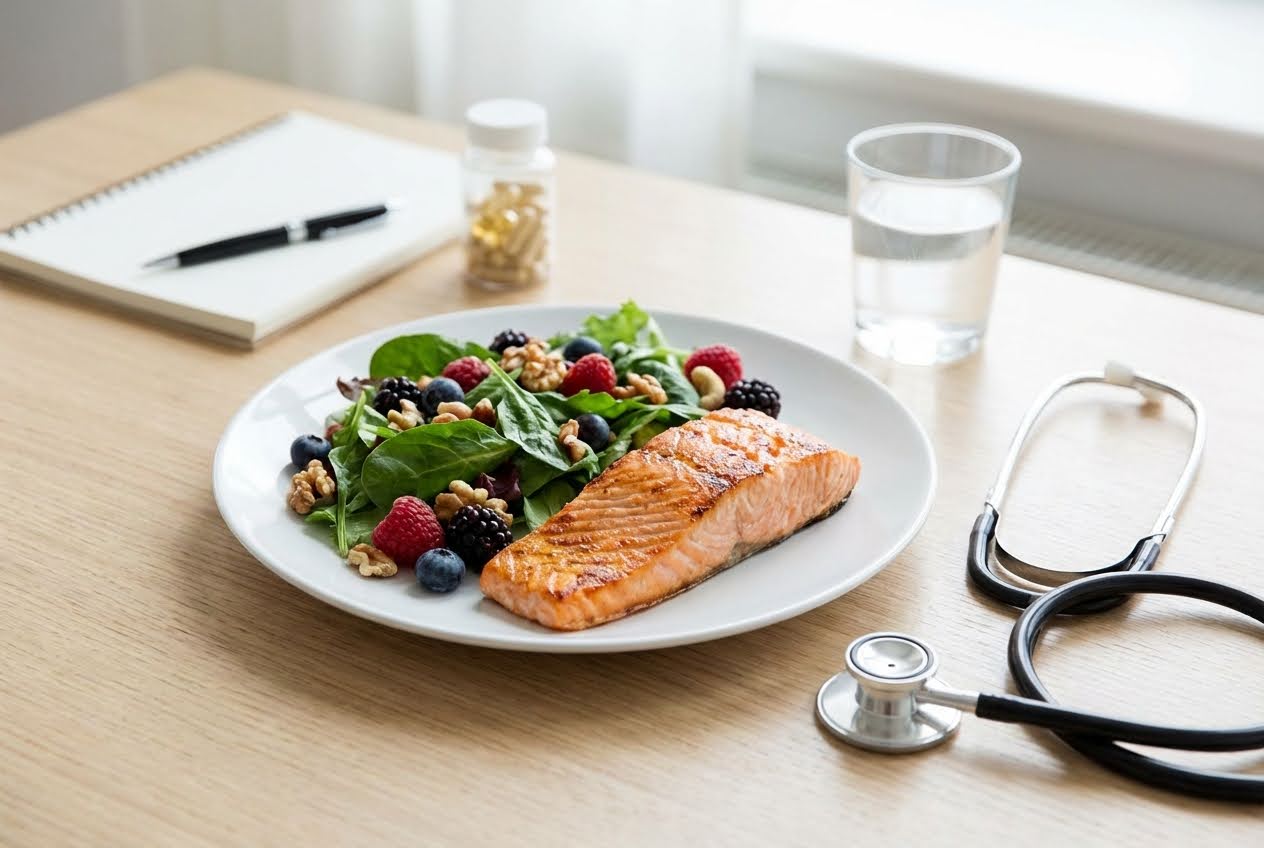 Popular Dietary Patterns for Midlife Health
This eating pattern consistently shows the best outcomes for perimenopausal women. It emphasizes vegetables, fruits, whole grains, olive oil, fish, and moderate amounts of poultry and dairy. Red meat and processed foods appear rarely. The Mediterranean approach reduces inflammation, supports heart health, and provides the nutrients women need during this transition.
Chronic inflammation worsens perimenopause symptoms. An anti-inflammatory diet focuses on colorful vegetables, berries, fatty fish, nuts, and olive oil while avoiding processed foods, refined sugars, and excessive red meat. This approach overlaps significantly with Mediterranean eating.
Intermittent fasting works differently for women than men. Aggressive fasting protocols can worsen hormonal imbalances during perimenopause. A gentle 12–13-hour overnight fast may provide benefits without stress. Women should monitor how fasting affects their energy, sleep, and mood.
Declining estrogen affects skin elasticity and joint lubrication. Adequate hydration supports both. About 2 to 2.5 liters of fluid per day is a baseline; active women need more. Herbal teas count toward fluid intake. Limiting alcohol and caffeine helps maintain hydration.
Stress hormones interact with reproductive hormones, often worsening symptoms. Eating slowly and without distractions improves digestion and satisfaction. Planning meals reduces decision fatigue. Keeping nutrient-dense snacks available prevents poor choices when hunger strikes.
doctronic.tech can help women create personalized nutrition plans based on their specific symptoms and health history. The AI-powered platform remembers individual concerns and provides tailored recommendations.
Fatty fish like salmon stand out for their combination of protein, omega-3 fats, and vitamin D. Eating them twice weekly supports brain function, mood, and bone health and reduces inflammation.
Most women notice improvements within two to four weeks of consistent dietary changes. Hot flash reduction may take longer, typically six to twelve weeks of regular phytoestrogen consumption.
A balanced diet should come first. Vitamin D, calcium, and omega-3 supplements may help if food intake falls short. Consulting with a healthcare provider through doctronic.tech can help determine individual needs.
Diet significantly reduces symptoms but rarely eliminates them completely. Combined with exercise, stress management, and adequate sleep, the right eating approach makes this transition much more manageable.
Weight gain is common but not inevitable. Maintaining muscle through protein intake and strength training, combined with nutrient-dense eating, helps prevent or minimize weight changes.
The best diet for perimenopause emphasizes whole foods, adequate protein, healthy fats, and plenty of fiber while limiting processed foods, sugar, and alcohol. Women experiencing challenging symptoms can get personalized guidance through doctronic.tech, which offers personalized AI-guided nutrition insights and telehealth consultations available around the clock.
Meta Description: Learn about the 7 common and serious side effects of Airsupra and how to manage risks like oral thrush or heart issues through proper inhaler [...]
Read MoreMeta Description: Learn about 8 budesonide interactions and what to avoid when you’re taking budesonide, including grapefruit and common drugs, to ensure your treatment is [...]
Read MoreMeta Description: Learn about these 7 Xolair interactions and what to avoid when you’re taking Xolair to safely manage your asthma, chronic hives, or nasal polyp [...]
Read More